You get your blood work back and everything looks reasonably normal until you reach one number: A1C. Maybe your doctor calls it “borderline.” Maybe it has crept up since your last physical. Suddenly you are wondering whether you have diabetes, whether you need medication, and exactly how worried you should be.
Am I Pre-Diabetic?
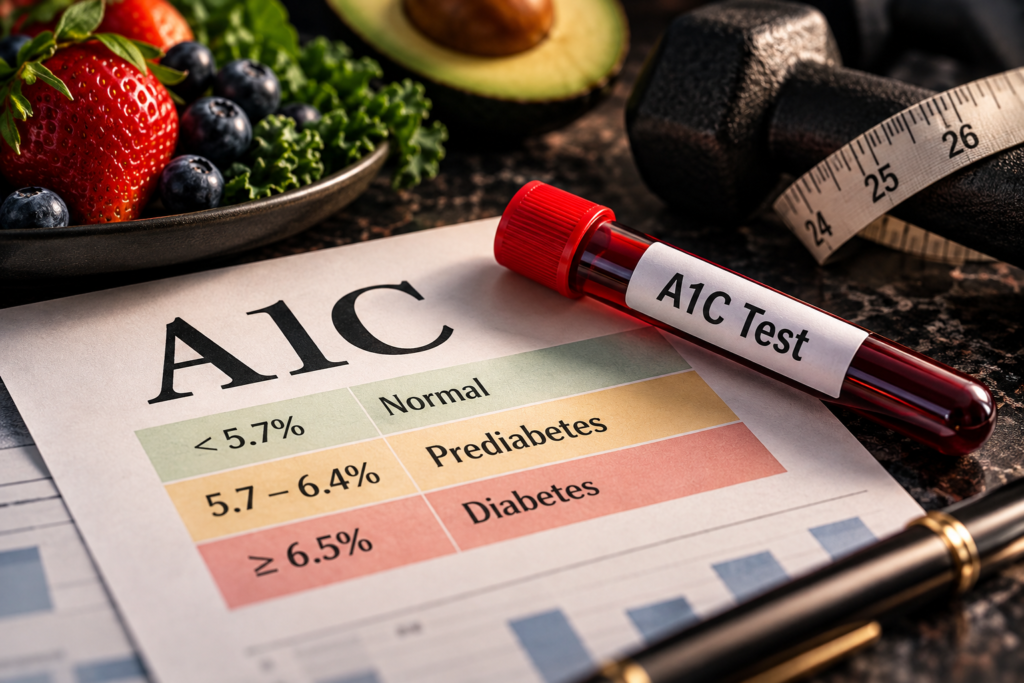
An A1C test estimates your average blood sugar over roughly the previous two to three months. In general, an A1C below 5.7% is considered normal, 5.7% to 6.4% falls within the prediabetes range, and 6.5% or higher is within the diabetes range. A diagnosis of diabetes generally requires confirmation unless there are clear symptoms and other diagnostic findings.
If your A1C is sitting somewhere around that 5.7% threshold, does that mean you have prediabetes? Possibly, but the number should not be viewed in isolation.
A1C is useful because it gives your physician a broader picture than a single glucose measurement taken on one morning. At the same time, fasting glucose can provide additional information. A fasting blood sugar between 100 and 125 mg/dL is also considered within the prediabetes range. It is entirely possible for someone to have a normal fasting glucose while their A1C falls into the prediabetes range, which is one reason looking at several metabolic markers can be more useful than focusing on a single result.
Overall Health Matters
Your overall metabolic health matters too. Weight changes, abdominal fat, blood pressure, triglycerides, HDL cholesterol, activity level, family history, sleep, diet, and other factors can help provide context. Insulin resistance and metabolic syndrome can develop gradually, and many people feel perfectly fine while their numbers are beginning to shift. That is exactly why routine blood work can be valuable. You do not necessarily have to wait until you feel sick to discover that something is changing.
There are also situations in which A1C may not tell the whole story. Certain forms of anemia, kidney or liver disease, blood disorders, recent blood loss or transfusion, pregnancy, and some medications can affect A1C accuracy. Your physician can determine whether another test or repeat testing makes sense based on your medical history.
The encouraging part about discovering a borderline A1C is that you have information before the problem progresses further. Nutrition, regular physical activity, maintaining muscle, improving sleep, and addressing excess weight when appropriate can all become part of the plan. For patients who need additional help, medical treatment or structured weight-management support may also be appropriate depending on individual risk factors and health history.
At Internal Medicine, Lipid & Wellness Practice in Fort Myers, the goal is not simply to circle an abnormal number on a laboratory report. Their concierge internal medicine approach allows time to look at A1C alongside fasting glucose, lipid markers, blood pressure, weight, medications, family history, and other metabolic information. For patients dealing with prediabetes, diabetes, metabolic syndrome, or weight concerns, that more complete evaluation can help determine what needs attention now and what can be monitored over time.
A “borderline” A1C is not a reason to panic, but it is also not something to ignore.
Sometimes the best time to address a metabolic problem is while it is still quietly knocking on the door rather than waiting for it to move in.
Looking for a private practice physician in Fort Myers, Florida who takes the time to really get to know you and your health? Visit www.IMLWP.com today! They are located at 6160 Winkler Rd. in Ft. Myers, Florida. Give them a call to schedule by dialing 239-362-3005.