
Turning 50 does not mean your body suddenly receives a memo announcing that everything is about to fall apart. There is no biological switch that flips on your birthday. But somewhere around midlife, many of the gradual changes that have been happening quietly in the background can become much harder to ignore.
You may notice that maintaining muscle takes more effort than it used to. Recovery after exercise can take longer. Weight may start settling around your midsection even though your diet has not changed dramatically. Sleep can become lighter or more interrupted, energy may be less predictable, and the things you could once get away with in your 30s suddenly seem to come with consequences.
Muscle Mass Starts to Matter More
Muscle is one of the biggest things worth paying attention to after 50. Adults gradually lose muscle mass as they age, and that loss can accelerate later in life if strength training, protein intake, activity, and overall health are not supporting it.
Less muscle can affect strength, balance, metabolism, glucose regulation, and even how your body composition changes over time. The scale may stay relatively stable while the ratio of muscle to body fat quietly shifts.
Strength Training Becomes More Important
Regular resistance exercise becomes increasingly valuable because maintaining muscle is about much more than appearance. Muscle supports mobility, independence, metabolic health, and long-term function. This is one reason body composition can sometimes tell a more useful story than body weight alone.
Metabolic Health Can Begin to Shift
Insulin sensitivity may decline with age, abdominal fat can become easier to gain, and blood pressure or blood sugar numbers that were once comfortably normal may begin drifting upward.
This is why A1C, fasting glucose, weight, waist circumference, blood pressure, triglycerides, and other metabolic markers become increasingly important to monitor. Feeling fine does not necessarily mean everything underneath the hood is running exactly the way it was ten or twenty years ago.
Small Changes Can Add Up
A slightly higher blood pressure reading, a borderline A1C, creeping triglycerides, or gradual weight gain may not look dramatic on their own. Together, however, they can reveal a larger pattern that deserves attention before it becomes a bigger problem.
Hormones May Start Playing a Bigger Role
Women may be navigating perimenopause or menopause, with changes in estrogen and progesterone affecting sleep, bone health, body composition, mood, temperature regulation, and sexual health.
Men can experience gradual changes in testosterone with age as well. Hormones are not responsible for every symptom after 50, but they are part of the larger picture and may deserve evaluation when symptoms or health history suggest it.
Not Every Symptom Is “Just Aging”
Fatigue, low libido, poor sleep, changes in body composition, brain fog, or mood changes may sometimes be connected to hormonal, thyroid, metabolic, nutritional, or medication-related issues. Age matters, but it should not become a convenient explanation for everything.
Cardiovascular Risk Deserves More Attention
Cholesterol is not simply about whether your total number looks “high.” Family history, blood pressure, diabetes, smoking history, kidney health, and other risk factors can all influence cardiovascular health.
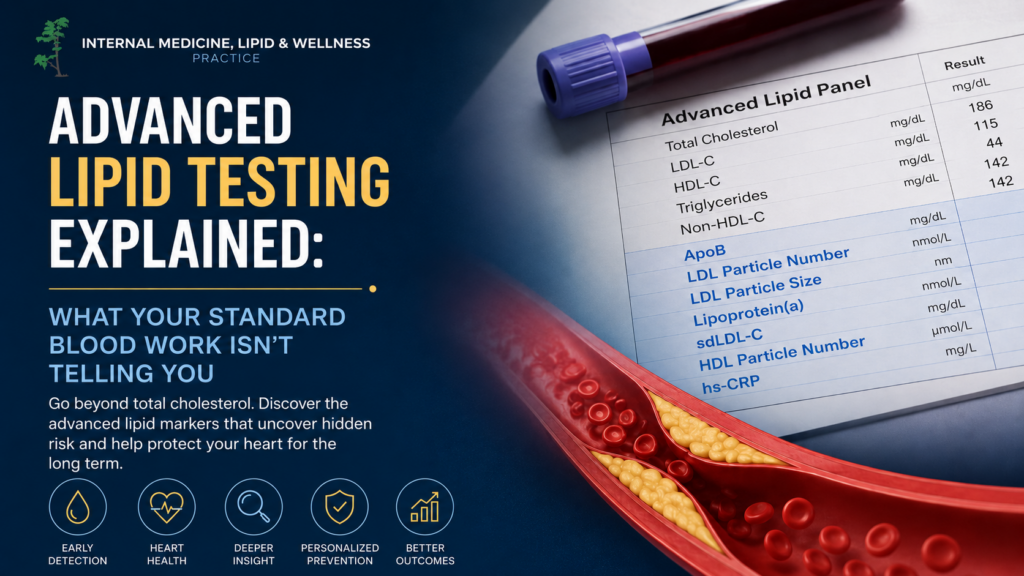
More advanced lipid testing can sometimes provide additional information beyond a standard cholesterol panel. For patients with family history, unusual cholesterol patterns, or other risk factors, a deeper look may make sense.
Prevention Matters Before Symptoms Appear
Cardiovascular disease can develop quietly. That is why routine evaluation, blood pressure management, cholesterol monitoring, metabolic testing, and assessment of individual risk become increasingly important in midlife.
Bone Health, Thyroid Function, Sleep, and Medications Matter Too
Bone density gradually becomes more important, particularly for women after menopause. Thyroid function can influence energy, weight, temperature regulation, digestion, and mood. Sleep may become more fragmented. Medication lists may also get longer as people begin seeing multiple specialists. At this stage of life, regular medication review becomes increasingly valuable. Sometimes fatigue, dizziness, weakness, or brain fog are related to medication side effects or interactions rather than a brand-new condition.
Why 50 Is a Good Time for a Deeper Health Review
At Internal Medicine, Lipid & Wellness Practice in Fort Myers, the concierge primary-care model allows more time to look at the entire picture rather than rushing through a checklist.
The practice manages conditions including hypertension, diabetes and metabolic syndrome, thyroid disorders, lipid and cholesterol problems, anemia, heart-disease prevention, weight concerns, hormone and endocrine issues, and age-related health changes. More advanced metabolic and lipid testing may also be considered when appropriate. Your 50s can actually be an incredibly useful health checkpoint. You have enough history to see patterns, enough information to identify risks, and still plenty of opportunity to change where things are heading.
It is totally possible to feel great well into your senior years. 50 is still young! Work with the doctors at Internal Medicine Lipid and Wellness of Fort Myers. www.IMLWP.com 239-362-3005.