If you feel healthy, exercise regularly, sleep reasonably well, and have no obvious symptoms, it can be tempting to skip your annual physical altogether. After all, why go to the doctor when nothing seems wrong?
The answer is: Because some of the most important health changes happen quietly.
High blood pressure, elevated cholesterol, insulin resistance, early diabetes, thyroid problems, kidney changes, and cardiovascular risk factors may develop long before you actually feel sick. An annual physical gives your physician an opportunity to look for those changes while they are still easier to address.
At Internal Medicine, Lipid & Wellness Practice in Fort Myers, annual care is about more than checking a few boxes and sending you home. As a concierge, membership-based internal medicine practice, IMLWP has the opportunity to look at trends over time and understand how your health is changing from year to year.
That matters because one isolated lab result does not always tell the entire story.
Maybe your cholesterol is technically still within range, but it has steadily increased for three years. Perhaps your blood pressure has started creeping upward. Your A1C may still be considered acceptable, but the trend suggests your blood sugar control is changing. Weight, medications, kidney function, thyroid markers, family history, and lifestyle can all provide additional context.
An annual physical is also a good time for a thorough medication review. As we age, prescriptions often accumulate. Different specialists may prescribe different medications, and over-the-counter products and supplements can enter the mix as well. Reviewing everything together can help identify unnecessary duplication, potential interactions, dosing concerns, or medications that may no longer be needed.
Preventive care matters too. Your physician can review whether screenings, vaccines, cardiovascular testing, cancer screening, or other preventive measures are appropriate based on your age, personal history, and family history.
And sometimes the most valuable part of an annual visit is simply having enough time to talk.
Maybe you have noticed subtle fatigue, changes in sleep, digestive issues, reduced stamina, memory concerns, or a new ache you have been ignoring because it does not seem serious enough to schedule a separate appointment. In a concierge practice, those smaller concerns can be discussed before they become bigger ones.
Feeling fine is a good thing. The goal of an annual physical is to help keep it that way.
At Internal Medicine, Lipid & Wellness Practice, concierge membership allows for a more personalized approach to preventive care, chronic disease management, advanced lipid evaluation, medication review, metabolic health, and long-term wellness.
You do not have to wait until something hurts to pay attention to your health. IMLWP offers memberships and concierge care that allows their physicians to give your case the time and attention you deserve.
Most serious health problems do not begin with a flashing warning sign. More often, the first clues are subtle enough to blame on stress, aging, poor sleep, a busy schedule, or simply “not feeling like yourself.” That is one reason routine medical care matters. Many conditions are easier to address when changes are recognized early rather than after symptoms become impossible to ignore.
The goal is not to become hyperfocused on every ache or off day. Bodies fluctuate. What matters more is noticing symptoms that are new, persistent, worsening, or occurring together.
When Is Fatigue More Than Just Being Tired?
Fatigue is one of the easiest symptoms to dismiss because nearly everyone experiences it occasionally. Persistent fatigue, however, can be associated with a wide range of medical issues, including anemia, thyroid dysfunction, diabetes, sleep apnea, heart disease, nutritional deficiencies, infections, medication effects, and other conditions.
Pay attention when fatigue lasts for weeks, interferes with normal activity, appears despite adequate sleep, or occurs alongside symptoms such as shortness of breath, dizziness, weight changes, palpitations, or unusual weakness. Instead of treating fatigue as a diagnosis itself, a physician can look at the larger pattern and determine whether blood work or additional testing is appropriate.
Can Heart Disease Have Subtle Symptoms?
Heart disease does not always announce itself with dramatic chest pain. Some people experience pressure, tightness, unusual shortness of breath, reduced exercise tolerance, fatigue, nausea, dizziness, or discomfort in the jaw, back, shoulder, or arm.
Women and older adults may sometimes experience less typical symptoms, which can make cardiovascular problems easier to overlook. New chest pressure, severe shortness of breath, fainting, or symptoms suggesting a heart attack require immediate medical attention.
Less dramatic but persistent changes deserve attention too. If activities that used to feel easy suddenly leave you unusually winded or exhausted, tell your physician.
What Are Some Early Signs of Diabetes?
Type 2 diabetes can develop gradually, and some people have few noticeable symptoms initially. Increased thirst, frequent urination, unusual hunger, blurry vision, fatigue, recurrent infections, slow-healing wounds, or unexplained weight changes may all warrant evaluation.
Because elevated blood sugar may exist before obvious symptoms appear, routine laboratory testing can be especially important for adults with risk factors such as family history, excess weight, high blood pressure, abnormal cholesterol, or previous elevated glucose readings.
Can Kidney Disease Develop Without Obvious Symptoms?
Yes. Early kidney disease can be surprisingly quiet. As kidney function changes, people may eventually notice swelling in the ankles or feet, changes in urination, persistent itching, fatigue, nausea, muscle cramps, or difficulty concentrating.
High blood pressure and diabetes are two major risk factors for kidney disease, which is another reason regular monitoring matters. Blood and urine testing can sometimes reveal changes before symptoms become pronounced.
Are Weight Changes Always About Diet?
Not necessarily. Unexplained weight gain or weight loss can sometimes reflect thyroid problems, diabetes, digestive disorders, hormonal changes, medication effects, fluid retention, or other health issues.
The same applies to changes in body composition. A person may notice increasing abdominal weight, reduced muscle mass, or significant changes in appetite even when the number on the scale has not shifted dramatically.
When weight changes occur without an obvious lifestyle explanation, discussing them with a physician can help determine whether metabolic, hormonal, or other factors should be evaluated.
What Other Symptoms Are Easy to Ignore?
Persistent changes in bowel habits, blood in the stool or urine, unexplained bruising, recurring abdominal discomfort, frequent headaches, new numbness or tingling, persistent cough, skin lesions that change in size or color, and wounds that do not heal should not automatically be written off.
One isolated symptom does not necessarily indicate disease. The more important questions are whether the symptom is new, how long it has been present, whether it is getting worse, and whether other changes are happening at the same time.
Why Preventive Care Matters
Good primary care is not simply about treating illness after it appears. It is also about establishing a baseline, monitoring changes over time, reviewing medications, evaluating risk factors, and deciding when further testing makes sense.
At Internal Medicine, Lipid & Wellness Practice in Fort Myers, patients receive care through a private-pay concierge membership model that allows more time for individualized appointments, preventive care, medication review, laboratory interpretation, and discussion of changes that may otherwise be difficult to address during a brief visit.
That additional time can be especially useful when symptoms are vague or several concerns seem unrelated. Sometimes the important clue is not a single symptom. It is the pattern that appears when someone finally has enough time to tell the whole story.
Your body does not need to be in crisis before it deserves attention. If something has changed and continues to feel different, bringing it up early is often the smartest place to begin.
Take a Proactive Approach to Heart Health
If you’re searching for advanced lipid testing in Fort Myers, IMLWP offers cutting-edge diagnostics and personalized care designed to prevent heart disease, not just react to it. Schedule a consultation today and take the next step toward a healthier heart and a longer life.
Memberships are limited to ensure we maintain our high standards of availability and care. Spots fill quickly.
Get started today. Select the concierge healthcare plan that fits your life and take control of your health.
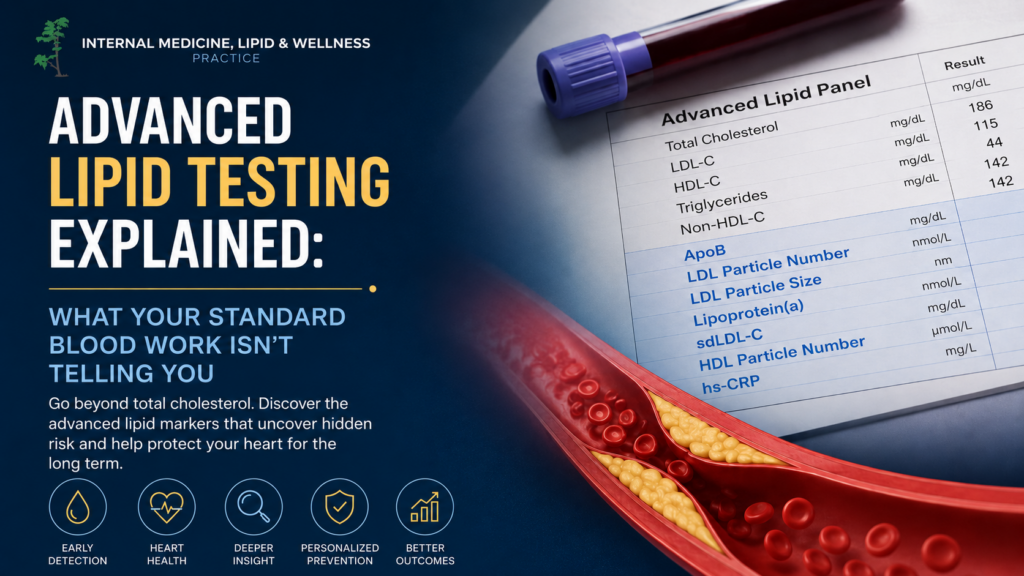
A standard cholesterol panel is a useful starting point, but it does not always tell the full story about cardiovascular risk. Many people are told their cholesterol is “normal,” only to later discover they had hidden risk factors that were never checked. That is where advanced lipid testing can make a meaningful difference.
Most routine blood work includes total cholesterol, LDL cholesterol, HDL cholesterol, and triglycerides. These numbers are important, but they are broad markers. They show how much cholesterol is being carried in the blood, but they do not always reveal how that cholesterol is being transported, how many potentially harmful particles are present, or whether genetic risk factors are quietly increasing a person’s chance of heart attack or stroke.
Advanced lipid testing goes deeper.
Instead of only looking at LDL cholesterol, often called “bad cholesterol,” advanced testing may evaluate markers such as ApoB, LDL particle number, LDL particle size, lipoprotein(a), and inflammatory or metabolic indicators tied to cardiovascular risk. These markers can help uncover risk that may be missed on a basic lipid panel.
One of the most important markers is ApoB. ApoB is a protein found on many of the particles that can contribute to plaque buildup in the arteries. In simple terms, ApoB can help show the number of potentially artery-damaging particles in circulation. A person may have an LDL cholesterol number that appears acceptable, but if their ApoB is elevated, they may still have more cardiovascular risk than expected.
Lipoprotein(a), also known as Lp(a), is another critical marker. Lp(a) is largely genetic, which means lifestyle changes alone may not significantly lower it. The standard lipid panel does not include Lp(a), and many people never know they have elevated levels unless it is specifically tested. The American Heart Association notes that elevated Lp(a) can increase the risk of heart disease and stroke, and that a standard cholesterol test does not include this marker.
This is especially important for people with a family history of heart disease, stroke, high cholesterol, early heart attacks, or unexplained cardiovascular events. Someone can eat well, exercise, maintain a healthy weight, and still have inherited lipid risks that deserve attention.
Advanced lipid testing may also help identify insulin resistance patterns. Elevated triglycerides, low HDL, and certain particle patterns can suggest metabolic stress long before major disease is diagnosed. This matters because cardiovascular disease often develops quietly over years. Waiting until symptoms appear is not prevention. It is damage control.
At IMLWP, the focus is on a more complete and proactive view of health. For patients who want to understand their real cardiovascular risk, advanced lipid testing can be an important part of a prevention-focused evaluation. Rather than relying only on basic lab ranges, the practice looks at the broader picture: family history, inflammation, metabolic health, lifestyle, hormone status, body composition, and deeper cardiovascular markers.
This type of testing can be especially helpful for patients who have been told their labs are “fine” but still have concerns. It may also be valuable for those with high blood pressure, diabetes, prediabetes, weight gain, fatigue, menopause-related metabolic changes, chronic inflammation, or a strong family history of cardiovascular disease.
The goal is not to create fear. The goal is clarity.
When risk is identified earlier, patients and providers have more options. Nutrition, exercise, targeted supplementation, medication when appropriate, weight management, blood sugar control, hormone optimization, and lifestyle changes can all be part of a smarter cardiovascular prevention plan.
Standard blood work can miss important clues. Advanced lipid testing helps fill in the blanks.
For individuals who want a more personalized, prevention-based approach to heart health, IMLWP offers a deeper look at the numbers that matter. Because when it comes to cardiovascular disease, what is not being measured may be exactly what needs attention.
It’s Time You Got the Care You Deserve
If you’ve been searching for a primary care doctor in Fort Myers who takes the time to understand your unique health needs, your search ends here. Experience healthcare that truly revolves around you. Schedule your appointment with IMLWP today and discover the difference that dedicated, patient-focused care can make. Explore their concierge membership plans today and learn how they can help you take control of your health journey.
Still have questions? Feel free to give them a call at 239-362-3005 Ext 200.