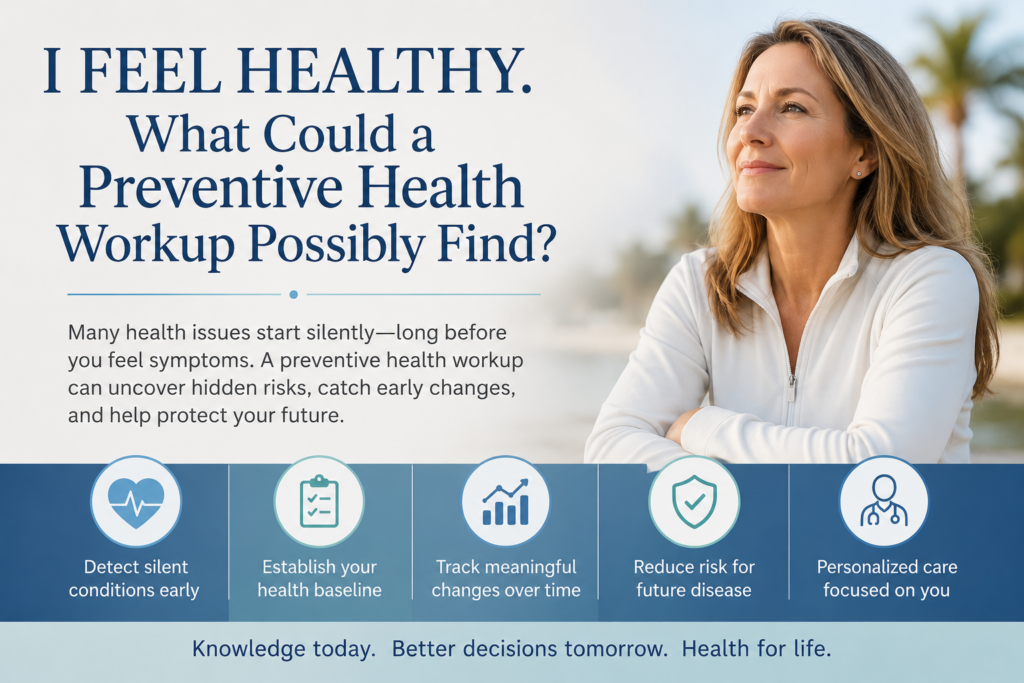
Feeling healthy is a good thing, but it is not always the same as knowing what is happening inside your body. Many of the health issues physicians watch most closely can begin quietly, without pain, obvious symptoms, or a dramatic warning sign. That is exactly why preventive health care matters. A comprehensive preventive workup can help establish your baseline, identify subtle changes over time, and uncover risk factors before they become harder to address.
At Internal Medicine, Lipid & Wellness Practice in Fort Myers, preventive care is not simply about checking a few boxes during an annual physical. As a concierge, membership-based primary care practice, the focus is on creating the time and continuity needed to understand the whole patient, including medical history, family history, lifestyle, medications, laboratory trends, cardiovascular risk, metabolic health, and changes that may not yet be producing noticeable symptoms.
What Can Show Up Before You Feel Sick?
Some of the most important findings in preventive medicine are discovered in people who feel perfectly fine. Elevated blood pressure may cause no obvious symptoms. Cholesterol abnormalities can develop silently. Blood sugar may begin creeping upward long before someone notices changes in energy, thirst, weight, or other symptoms. Certain vitamin deficiencies, thyroid abnormalities, liver or kidney changes, and early metabolic concerns can also appear on laboratory testing before they create a clear physical signal.
A preventive health workup may include a detailed medical history, physical examination, blood pressure assessment, routine laboratory testing, cholesterol evaluation, blood glucose measurements, and other testing based on your age, family history, medications, symptoms, and individual risk factors. Screening recommendations may also include age-appropriate cancer screenings, bone health evaluations, cardiovascular risk assessment, or additional testing when medically appropriate.
Why Does Establishing a Baseline Matter?
One laboratory value represents a moment in time. A series of results can tell a much more useful story.
When your physician has an established relationship with you and access to previous testing, subtle trends may become easier to recognize. A cholesterol level that technically remains within a reference range, for example, may still be moving in an unfavorable direction. Blood sugar, kidney function, liver enzymes, blood counts, or thyroid markers may also show gradual changes that deserve attention even before they cross into an abnormal range.
That longitudinal perspective is one of the advantages of ongoing primary care.
Isn’t Preventive Care Just an Annual Physical?
It should be more than that.
Good preventive care considers what your health looks like today while also asking what may affect it five, ten, or twenty years from now. Genetics, nutrition, activity, sleep, stress, medications, body composition, cardiovascular risk factors, and chronic disease history can all influence that picture.
Concierge primary care allows additional time for those conversations and for thoughtful follow-up when something deserves a closer look.
Feeling Good Is the Starting Point, Not the Finish Line
You do not need to feel sick to benefit from understanding your health more clearly. Preventive medicine is about gathering information, identifying risks where possible, tracking meaningful changes, and making informed decisions with your physician.
If you feel healthy, that is excellent. A preventive workup can help you better understand why, establish where you stand today, and give you a clearer picture of what deserves attention moving forward.
Internal Medicine, Lipid & Wellness Practice provides concierge, membership-based primary care for patients in Fort Myers and Southwest Florida who want a more personalized and proactive approach to their health. Visit: www.IMLWP.com to learn more!