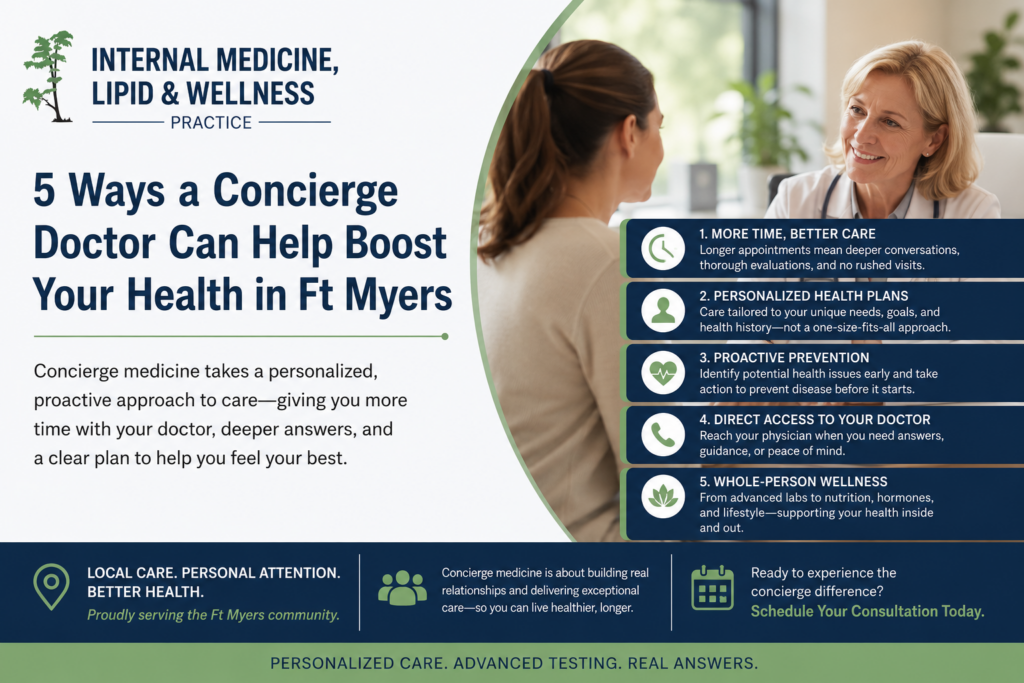
5 Ways a Concierge Doctor Can Help Boost Your Health in Ft. Myers

imwlp concierge doctors ft myers florida

Finding the right doctor can make a major difference in how a person feels, ages, and manages long-term health. For many patients, traditional healthcare can feel rushed, reactive, and impersonal. Appointments may be short, lab work may only cover the basics, and deeper health concerns can get pushed aside until symptoms become more serious.

Concierge medicine offers a different approach.

At Internal Medicine, Lipid & Wellness Practice in Ft. Myers, the focus is on personalized, proactive care that helps patients better understand their health and take meaningful steps toward improvement. Instead of waiting for illness to become the reason for care, concierge medicine allows patients to build an ongoing relationship with a physician who has the time to look deeper.

Here are five ways a concierge doctor can help boost health and support long-term wellness.

1. More Time With the Doctor

One of the biggest advantages of concierge medicine is time. Longer appointments allow for more detailed conversations, more thorough evaluations, and a better understanding of the patient’s full health picture.

In a rushed visit, it can be difficult to discuss fatigue, weight changes, sleep concerns, stress, medications, family history, hormones, heart health, and lifestyle in a meaningful way. With concierge care, patients are not treated like a checklist. They are treated like whole people.

That extra time can lead to better questions, better answers, and a clearer path forward.

2. Personalized Health Plans

No two patients are exactly alike. Age, genetics, metabolism, lifestyle, medical history, stress levels, and goals all matter. A concierge doctor can create a health plan based on the individual, not a one-size-fits-all template.

This may include customized lab testing, nutrition guidance, medication management, cardiovascular risk assessment, weight management support, hormone evaluation, and practical lifestyle recommendations. The goal is not simply to “manage numbers,” but to help patients feel better and function better.

Personalized care can be especially helpful for patients who have been told their labs are normal but still do not feel like themselves.

3. A More Proactive Approach to Prevention

Traditional medicine often focuses on treating problems after they appear. Concierge medicine is designed to be more proactive.

For example, advanced lipid testing, metabolic markers, inflammation levels, blood sugar trends, and family history can reveal risk factors that may not show up on basic testing. This deeper view allows the physician to identify potential issues earlier and help patients take action before bigger problems develop.

Prevention is not just an annual physical. It is an ongoing strategy.

4. Direct Access and Better Communication

When patients have questions, waiting days or weeks for guidance can be frustrating. Concierge medicine often allows for better communication and improved access to the physician.

This can be especially valuable when reviewing lab results, adjusting medications, discussing new symptoms, or making health decisions. Patients benefit from having a doctor who knows their history and can provide more informed guidance.

Better access can also create peace of mind. Health should not feel like a guessing game with a voicemail system as the referee.

5. Whole-Person Wellness Support

Good health is more than the absence of disease. Energy, strength, sleep, mood, metabolism, heart health, hormones, and quality of life all play a role.

Internal Medicine, Lipid & Wellness Practice takes a comprehensive approach to care by looking at how different systems in the body work together. This type of whole-person view can help uncover patterns that may be missed when each symptom is treated separately.

For patients in Ft. Myers who want more personalized attention, deeper testing, and a physician relationship built around prevention, concierge medicine can be a powerful option.

A concierge doctor does more than respond to illness. The right physician helps patients understand their health, protect their future, and create a smarter plan for living well.

Ready for a great concierge doctor right in Ft. Myers, Florida? Visit: www.IMLWP.com today!
Advanced Lipid Testing Explained: What Your Standard Blood Work Isn’t Telling You

Find a doctor fort myers imwlp

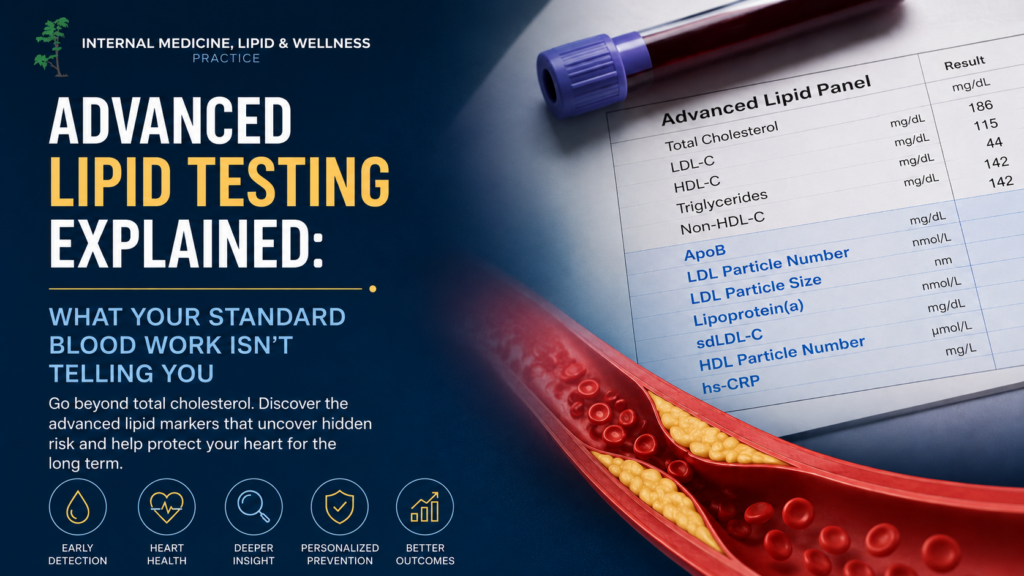
A standard cholesterol panel is a useful starting point, but it does not always tell the full story about cardiovascular risk. Many people are told their cholesterol is “normal,” only to later discover they had hidden risk factors that were never checked. That is where advanced lipid testing can make a meaningful difference.

Find a doctor fort myers imwlp

Most routine blood work includes total cholesterol, LDL cholesterol, HDL cholesterol, and triglycerides. These numbers are important, but they are broad markers. They show how much cholesterol is being carried in the blood, but they do not always reveal how that cholesterol is being transported, how many potentially harmful particles are present, or whether genetic risk factors are quietly increasing a person’s chance of heart attack or stroke.

Advanced lipid testing goes deeper.

Instead of only looking at LDL cholesterol, often called “bad cholesterol,” advanced testing may evaluate markers such as ApoB, LDL particle number, LDL particle size, lipoprotein(a), and inflammatory or metabolic indicators tied to cardiovascular risk. These markers can help uncover risk that may be missed on a basic lipid panel.

One of the most important markers is ApoB. ApoB is a protein found on many of the particles that can contribute to plaque buildup in the arteries. In simple terms, ApoB can help show the number of potentially artery-damaging particles in circulation. A person may have an LDL cholesterol number that appears acceptable, but if their ApoB is elevated, they may still have more cardiovascular risk than expected.

Lipoprotein(a), also known as Lp(a), is another critical marker. Lp(a) is largely genetic, which means lifestyle changes alone may not significantly lower it. The standard lipid panel does not include Lp(a), and many people never know they have elevated levels unless it is specifically tested. The American Heart Association notes that elevated Lp(a) can increase the risk of heart disease and stroke, and that a standard cholesterol test does not include this marker.

This is especially important for people with a family history of heart disease, stroke, high cholesterol, early heart attacks, or unexplained cardiovascular events. Someone can eat well, exercise, maintain a healthy weight, and still have inherited lipid risks that deserve attention.

Advanced lipid testing may also help identify insulin resistance patterns. Elevated triglycerides, low HDL, and certain particle patterns can suggest metabolic stress long before major disease is diagnosed. This matters because cardiovascular disease often develops quietly over years. Waiting until symptoms appear is not prevention. It is damage control.

At IMLWP, the focus is on a more complete and proactive view of health. For patients who want to understand their real cardiovascular risk, advanced lipid testing can be an important part of a prevention-focused evaluation. Rather than relying only on basic lab ranges, the practice looks at the broader picture: family history, inflammation, metabolic health, lifestyle, hormone status, body composition, and deeper cardiovascular markers.

This type of testing can be especially helpful for patients who have been told their labs are “fine” but still have concerns. It may also be valuable for those with high blood pressure, diabetes, prediabetes, weight gain, fatigue, menopause-related metabolic changes, chronic inflammation, or a strong family history of cardiovascular disease.

The goal is not to create fear. The goal is clarity.

When risk is identified earlier, patients and providers have more options. Nutrition, exercise, targeted supplementation, medication when appropriate, weight management, blood sugar control, hormone optimization, and lifestyle changes can all be part of a smarter cardiovascular prevention plan.

Standard blood work can miss important clues. Advanced lipid testing helps fill in the blanks.

For individuals who want a more personalized, prevention-based approach to heart health, IMLWP offers a deeper look at the numbers that matter. Because when it comes to cardiovascular disease, what is not being measured may be exactly what needs attention.

It’s Time You Got the Care You Deserve

If you’ve been searching for a primary care doctor in Fort Myers who takes the time to understand your unique health needs, your search ends here. Experience healthcare that truly revolves around you. Schedule your appointment with IMLWP today and discover the difference that dedicated, patient-focused care can make. Explore their concierge membership plans today and learn how they can help you take control of your health journey.

Still have questions? Feel free to give them a call at 239-362-3005 Ext 200.

The Truth About Preventative Medicine: How to Catch Heart Disease Before It Starts

IMLWP A New Model for Modern Medicine

Heart disease doesn’t appear overnight. It develops quietly over years (often decades) long before symptoms ever show up. By the time chest pain or shortness of breath enters the picture, the process is already well underway. That’s the uncomfortable truth. The empowering part? With the right approach, it’s also highly preventable.

At IMLWP, prevention isn’t a checkbox on an annual physical. It’s a continuous, personalized strategy designed to identify risk early and intervene before damage is done.

IMLWP A New Model for Modern Medicine

Why Traditional Care Falls Short
Most conventional healthcare models are reactive. They’re built to diagnose and treat disease once it becomes obvious. Standard screenings (like basic cholesterol panels or blood pressure checks) are helpful, but they don’t always tell the full story. You can have “normal” numbers and still be developing plaque, inflammation, or metabolic dysfunction behind the scenes.

That’s where many people fall through the cracks. They’re told everything looks fine… until it suddenly isn’t.

Looking Deeper Than Basic Labs
True preventative medicine goes beyond surface-level markers. Advanced testing can reveal early signs of cardiovascular risk long before a major event occurs. This includes deeper lipid analysis, inflammation markers, insulin resistance, and even imaging that detects early plaque buildup.

Instead of asking, “Are you sick yet?” the better question is, “Where are you trending?”

Because trends tell the truth. And trends give you time.

The Power of Early Detection
Heart disease often begins with subtle dysfunction, low-grade inflammation, blood sugar imbalance, or small changes in vascular health. These don’t trigger alarms in standard care, but they matter. Catching these early allows for targeted lifestyle changes, nutrition adjustments, and medical support that can slow, stop, or even reverse progression.

This isn’t about fear. It’s about control.

Personalized, Ongoing Care Matters
No two patients have the same risk profile. Genetics, stress levels, sleep, diet, and environment all play a role. That’s why one-size-fits-all advice falls flat. Preventative medicine works best when it’s tailored, and when you have consistent access to a provider who knows your history and is actively tracking your progress.

A concierge model changes the equation. With more time, deeper insight, and ongoing communication, care becomes proactive instead of reactive. You’re not waiting for an annual visit to address concerns – you’re managing your health in real time.

What Prevention Actually Looks Like
Preventing heart disease isn’t about guessing or generic advice. It’s about using data to guide decisions. It means identifying your unique risk factors, monitoring changes over time, and making adjustments before problems escalate.

At IMLWP, that process is intentional. It’s detailed. And it’s designed to keep you ahead of disease, not chasing it. Because the goal isn’t just to live longer. It’s to live better, with clarity, energy, and confidence in where your health is headed.

The reality is simple: heart disease is often predictable. When something is predictable, it becomes preventable, if you’re paying attention early enough. If you’re looking for a modern family medicine practice in Fort Myers, IMLWP offers a smarter, more personalized healthcare experience. If you’re ready for healthcare that’s built around you, concierge medicine may be the solution.  Explore their concierge membership plans today and learn how they can help you take control of your health journey.

Still have questions? Feel free to give us a call at 239-362-3005 Ext 200.

High Cholesterol Even With a Healthy Diet? Here’s What Most People Are Missing

Managing high cholesterol with personalized care. IMWLP

If you eat well, stay active, and still hear your doctor say, “Your cholesterol is high,” it can feel frustrating and confusing. After all, you’re doing everything “right.” So what’s going on?

At Internal Medicine Wellness & Lipid Practice (IMWLP), we see this scenario all the time. The truth is, cholesterol is far more complex than diet alone. If your numbers aren’t improving despite your healthy lifestyle, there may be deeper factors at play.

Managing high cholesterol with personalized care. IMWLP

Let’s break down what most people are missing.


It’s Not Just About What You Eat

Diet absolutely matters (but it’s only one piece of the puzzle).

Your body actually produces the majority of its cholesterol in the liver. That means even if you cut out saturated fats and processed foods, your cholesterol levels can still remain elevated due to internal processes you can’t control through diet alone.


Genetics Play a Major Role

One of the most overlooked causes of high cholesterol is genetics.

Conditions like familial hypercholesterolemia (FH) can cause your body to maintain high LDL (“bad cholesterol”) levels regardless of how clean your diet is. Many people don’t even realize they have a genetic predisposition until routine labs reveal persistently high numbers.

If high cholesterol runs in your family, it’s important to look beyond lifestyle changes and consider advanced testing and targeted treatment.


Inflammation Is the Hidden Driver

Cholesterol isn’t just about numbers, it’s about how your body is functioning as a whole.

Chronic inflammation can contribute to plaque buildup in arteries, even if your cholesterol levels are only mildly elevated. Stress, poor sleep, underlying conditions, and even gut health can all fuel inflammation and increase cardiovascular risk.

This is why two people with the same cholesterol numbers can have very different health outcomes.


Standard Testing Doesn’t Tell the Full Story

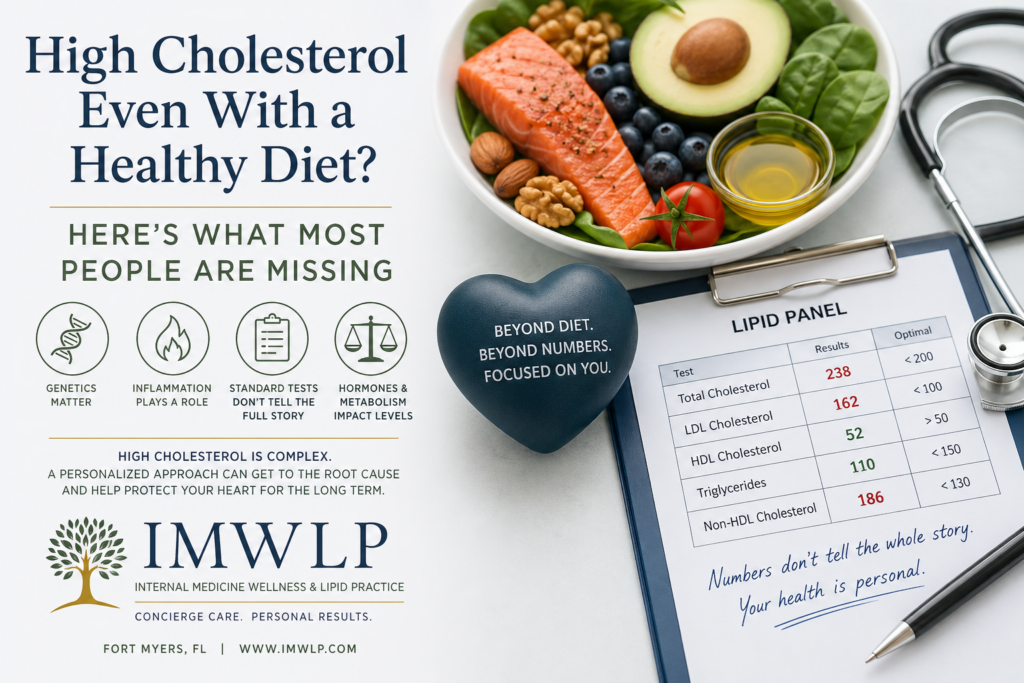
Most routine lipid panels measure total cholesterol, LDL, HDL, and triglycerides. While helpful, these numbers don’t always give the full picture.

Advanced lipid testing can reveal:

  • Particle size and number (more predictive of risk)
  • Lipoprotein(a), a genetic risk factor
  • Apolipoprotein B (ApoB), a key marker of cardiovascular risk

Without this deeper insight, underlying risks can go unnoticed.


Hormones and Metabolism Matter

Hormonal imbalances (especially involving thyroid function, insulin resistance, or menopause) can significantly impact cholesterol levels.

Even individuals who appear “healthy” on the surface may have subtle metabolic issues contributing to elevated cholesterol.


A Personalized Approach Makes the Difference

If you’ve been told to “just eat better” but your numbers aren’t improving, it may be time for a more personalized, comprehensive approach.

At IMWLP, we focus on:

  • Advanced lipid and metabolic testing
  • Identifying root causes, not just treating numbers
  • Customized treatment plans, including lifestyle, nutrition, and when appropriate, medication
  • Ongoing, concierge-level support to optimize your long-term health

The Bottom Line

High cholesterol isn’t always a reflection of poor lifestyle choices. In many cases, it’s a complex interplay of genetics, metabolism, inflammation, and more.

If you’re doing everything right and still not seeing results, you’re not alone—and you’re not out of options.

A deeper, more individualized approach can uncover what’s really driving your cholesterol—and help you take control of your health with confidence.


Ready to get answers?
IMWLP in Fort Myers offers concierge-level care designed to go beyond the basics, so you can finally understand your numbers and what to do about them. Get started today. Select the concierge healthcare plan that fits your life and take control of your health.

Join Now & Schedule Your Appointment or call their office at (239) 362-3005 ext 200 to make arrangements.