A standard cholesterol panel is a useful starting point, but it does not always tell the full story about cardiovascular risk. Many people are told their cholesterol is “normal,” only to later discover they had hidden risk factors that were never checked. That is where advanced lipid testing can make a meaningful difference.
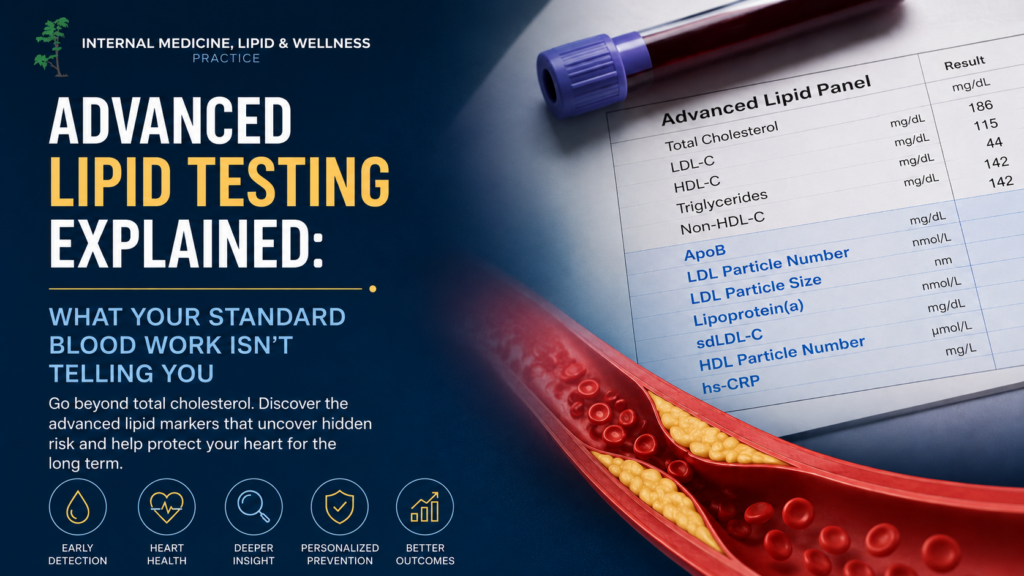
Most routine blood work includes total cholesterol, LDL cholesterol, HDL cholesterol, and triglycerides. These numbers are important, but they are broad markers. They show how much cholesterol is being carried in the blood, but they do not always reveal how that cholesterol is being transported, how many potentially harmful particles are present, or whether genetic risk factors are quietly increasing a person’s chance of heart attack or stroke.
Advanced lipid testing goes deeper.
Instead of only looking at LDL cholesterol, often called “bad cholesterol,” advanced testing may evaluate markers such as ApoB, LDL particle number, LDL particle size, lipoprotein(a), and inflammatory or metabolic indicators tied to cardiovascular risk. These markers can help uncover risk that may be missed on a basic lipid panel.
One of the most important markers is ApoB. ApoB is a protein found on many of the particles that can contribute to plaque buildup in the arteries. In simple terms, ApoB can help show the number of potentially artery-damaging particles in circulation. A person may have an LDL cholesterol number that appears acceptable, but if their ApoB is elevated, they may still have more cardiovascular risk than expected.
Lipoprotein(a), also known as Lp(a), is another critical marker. Lp(a) is largely genetic, which means lifestyle changes alone may not significantly lower it. The standard lipid panel does not include Lp(a), and many people never know they have elevated levels unless it is specifically tested. The American Heart Association notes that elevated Lp(a) can increase the risk of heart disease and stroke, and that a standard cholesterol test does not include this marker.
This is especially important for people with a family history of heart disease, stroke, high cholesterol, early heart attacks, or unexplained cardiovascular events. Someone can eat well, exercise, maintain a healthy weight, and still have inherited lipid risks that deserve attention.
Advanced lipid testing may also help identify insulin resistance patterns. Elevated triglycerides, low HDL, and certain particle patterns can suggest metabolic stress long before major disease is diagnosed. This matters because cardiovascular disease often develops quietly over years. Waiting until symptoms appear is not prevention. It is damage control.
At IMLWP, the focus is on a more complete and proactive view of health. For patients who want to understand their real cardiovascular risk, advanced lipid testing can be an important part of a prevention-focused evaluation. Rather than relying only on basic lab ranges, the practice looks at the broader picture: family history, inflammation, metabolic health, lifestyle, hormone status, body composition, and deeper cardiovascular markers.
This type of testing can be especially helpful for patients who have been told their labs are “fine” but still have concerns. It may also be valuable for those with high blood pressure, diabetes, prediabetes, weight gain, fatigue, menopause-related metabolic changes, chronic inflammation, or a strong family history of cardiovascular disease.
The goal is not to create fear. The goal is clarity.
When risk is identified earlier, patients and providers have more options. Nutrition, exercise, targeted supplementation, medication when appropriate, weight management, blood sugar control, hormone optimization, and lifestyle changes can all be part of a smarter cardiovascular prevention plan.
Standard blood work can miss important clues. Advanced lipid testing helps fill in the blanks.
For individuals who want a more personalized, prevention-based approach to heart health, IMLWP offers a deeper look at the numbers that matter. Because when it comes to cardiovascular disease, what is not being measured may be exactly what needs attention.
It’s Time You Got the Care You Deserve
If you’ve been searching for a primary care doctor in Fort Myers who takes the time to understand your unique health needs, your search ends here. Experience healthcare that truly revolves around you. Schedule your appointment with IMLWP today and discover the difference that dedicated, patient-focused care can make. Explore their concierge membership plans today and learn how they can help you take control of your health journey.
Still have questions? Feel free to give them a call at 239-362-3005 Ext 200.