Advanced Lipid Testing Explained: What Your Standard Blood Work Isn’t Telling You

Find a doctor fort myers imwlp

A standard cholesterol panel is a useful starting point, but it does not always tell the full story about cardiovascular risk. Many people are told their cholesterol is “normal,” only to later discover they had hidden risk factors that were never checked. That is where advanced lipid testing can make a meaningful difference.
Find a doctor fort myers imwlp

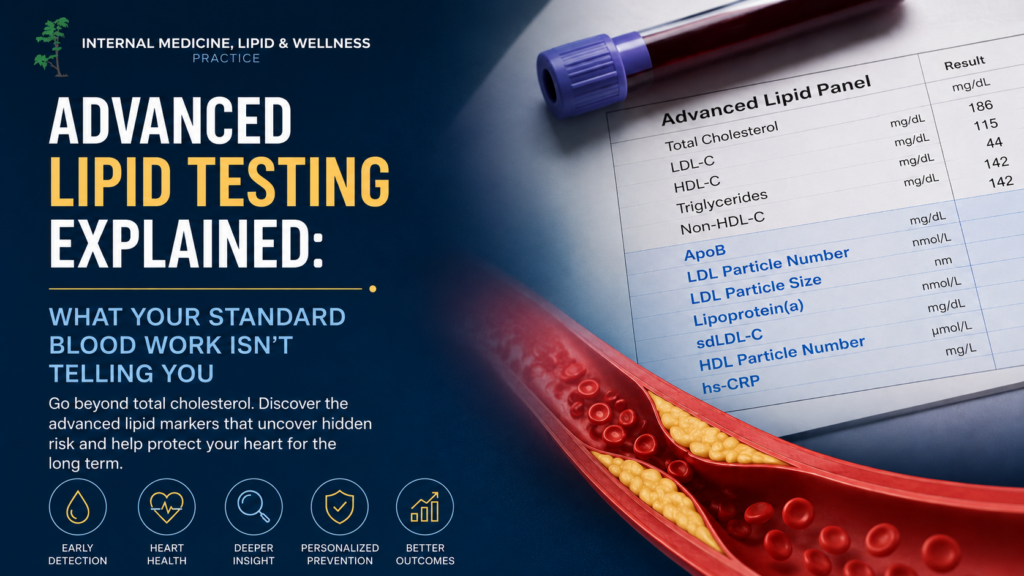
Most routine blood work includes total cholesterol, LDL cholesterol, HDL cholesterol, and triglycerides. These numbers are important, but they are broad markers. They show how much cholesterol is being carried in the blood, but they do not always reveal how that cholesterol is being transported, how many potentially harmful particles are present, or whether genetic risk factors are quietly increasing a person’s chance of heart attack or stroke.

Advanced lipid testing goes deeper.

Instead of only looking at LDL cholesterol, often called “bad cholesterol,” advanced testing may evaluate markers such as ApoB, LDL particle number, LDL particle size, lipoprotein(a), and inflammatory or metabolic indicators tied to cardiovascular risk. These markers can help uncover risk that may be missed on a basic lipid panel.

One of the most important markers is ApoB. ApoB is a protein found on many of the particles that can contribute to plaque buildup in the arteries. In simple terms, ApoB can help show the number of potentially artery-damaging particles in circulation. A person may have an LDL cholesterol number that appears acceptable, but if their ApoB is elevated, they may still have more cardiovascular risk than expected.

Lipoprotein(a), also known as Lp(a), is another critical marker. Lp(a) is largely genetic, which means lifestyle changes alone may not significantly lower it. The standard lipid panel does not include Lp(a), and many people never know they have elevated levels unless it is specifically tested. The American Heart Association notes that elevated Lp(a) can increase the risk of heart disease and stroke, and that a standard cholesterol test does not include this marker.

This is especially important for people with a family history of heart disease, stroke, high cholesterol, early heart attacks, or unexplained cardiovascular events. Someone can eat well, exercise, maintain a healthy weight, and still have inherited lipid risks that deserve attention.

Advanced lipid testing may also help identify insulin resistance patterns. Elevated triglycerides, low HDL, and certain particle patterns can suggest metabolic stress long before major disease is diagnosed. This matters because cardiovascular disease often develops quietly over years. Waiting until symptoms appear is not prevention. It is damage control.

At IMLWP, the focus is on a more complete and proactive view of health. For patients who want to understand their real cardiovascular risk, advanced lipid testing can be an important part of a prevention-focused evaluation. Rather than relying only on basic lab ranges, the practice looks at the broader picture: family history, inflammation, metabolic health, lifestyle, hormone status, body composition, and deeper cardiovascular markers.

This type of testing can be especially helpful for patients who have been told their labs are “fine” but still have concerns. It may also be valuable for those with high blood pressure, diabetes, prediabetes, weight gain, fatigue, menopause-related metabolic changes, chronic inflammation, or a strong family history of cardiovascular disease.

The goal is not to create fear. The goal is clarity.

When risk is identified earlier, patients and providers have more options. Nutrition, exercise, targeted supplementation, medication when appropriate, weight management, blood sugar control, hormone optimization, and lifestyle changes can all be part of a smarter cardiovascular prevention plan.

Standard blood work can miss important clues. Advanced lipid testing helps fill in the blanks.

For individuals who want a more personalized, prevention-based approach to heart health, IMLWP offers a deeper look at the numbers that matter. Because when it comes to cardiovascular disease, what is not being measured may be exactly what needs attention.

It’s Time You Got the Care You Deserve

If you’ve been searching for a primary care doctor in Fort Myers who takes the time to understand your unique health needs, your search ends here. Experience healthcare that truly revolves around you. Schedule your appointment with IMLWP today and discover the difference that dedicated, patient-focused care can make. Explore their concierge membership plans today and learn how they can help you take control of your health journey.

Still have questions? Feel free to give them a call at 239-362-3005 Ext 200.

Ways to Help Treats Upper Respiratory Illness Symptoms

Spring has sprung but that doesn’t mean we’re out of the woods just yet when it comes to cold and flu season. Upper respiratory illnesses (URI) are common in the early spring, just like the fall and winter seasons. The upper respiratory system includes the mouth, nose, sinuses, larynx, throat, and trachea. Unfortunately, many of the these URIs are viral and cannot be treated by antibiotics. These infections are not usually treated with antibiotics unless there is proof of a bacterial infection.

The common cold is a URI and a viral illness. Symptoms can include: a stuffy nose, muscle aches, sneezing, a sore throat, post-nasal drip, cough, and a mild fever (under 101.5). A cold can last anywhere from 3 to 14 days. If you’re illness is lasting at least 10 days with no improvement, you should schedule an appointment for an evaluation with the doctor.  Also, if you are experiencing a high fever, shortness of breath, wheezing, confusion, chest pain, teeth-chattering chills, or rib pain, you should make an appointment to see the doctor as soon as possible. At my office, our nursing staff can triage patients quickly with the above-mentioned issues. We can test for influenza (the flu) and low oxygen levels to check for more serious illnesses beyond a cold or allergy. We can also test for strep throat in our office quickly through a swab test.

Since viral infections cannot be treated with antibiotics, there are many remedies a person can do to lessen the symptoms and duration of his or her URI. Below, I’ve shared a few things that can be used when suffering from a URI.

  1. Vitamin C – When taken at a high dosage (1000mg 3 times a day), vitamin C has been known to shorten the duration of a cold.
  2. Zinc gluconate (Coldeez brand) – Take 5 to 6 lozenges per day every two hours. The high level of zinc gluconate (13.3 mg) improves symptoms and shortens duration of illness.
  3. Antihistamines (Zyrtec, Claritin, Alavert, Loratidine, Tavist,) can help with coughs and drying secretions.
  4. Vicks menthol rub can help breathing and provide relieve at night when applied to the chest, throat, and upper lip.
  5. Nasal saline can help flush out nostrils.
  6. Ibuprofen and other anti-inflammation medication can reduce a fever, headaches, and muscle aches. If you are on blood thinners or anti-platelet therapy, use acetaminophen instead of Iburprofen or asprin. If you are allergic to NSAIDS, avoid Ibuprofen, Aleve, or aspirin.

Below,  I’ve shared are a few links to medicinal products I offer and approve  on my website to help ease URI symptoms.

Sinus Relief Products

Cold and Cough Products

Pain Relievers

Allergy Medication

If you’re experience a long-lasting cold, flu-like or strep throat symptoms, give me, Dr. Kordonowy of Internal Medicine, Lipids & Wellness of Fort Myers, and my team a call today at 239-362-3005, ext. 200 or click here to contact us to schedule an appointment today.

Acid Reflux Facts

Put a little extra spicy sauce on your dinner? Or, did you overate last night? There’s a good chance you may feel like your breathing fire right now. Suffering from heartburn with that burning sensation in your chest is no fun. Nearly everyone experiences heartburn in their life. However, if you’ve been experiencing heartburn at least twice a week for multiple weeks, there’s a good chance you have acid reflux disease.  In the US, about 10 to 20 percent of the population suffers from this disease. More than 60 million Americans suffer from heartburn at least once a month. Not only is this a horrible disease to physically deal with, but $40 billion annually is spent on diagnosing and treating the disease.

There are two types of acid reflux disease: gastroesophageal reflux disease (GERD) and laryngopharyngeal reflux disease (LPRD). With GERD, the stomach acid travels to the esophagus and with LPRD the refluxed material travels further up the throat. Most people will experience heartburn when the lining of the esophagus encounters too much stomach acid for a prolonged period.  The resulting tissue inflammation of the esophagus causes the burning sensation. Chronic acid reflux is associated with abnormal cellular/tissue changes that over time increased the risk of esophageal cancer.  This “precancerous” tissue change is known as Barrett’s Esophagus/Disease. This concern/development is one of the reasons physicians will recommend a referral to a gastroenterologist for direct endoscopy of the esophagus for new onset and significant chronic heart burn.

Chronic reflux can lead to persistent cough, night time sleep difficulty, hoarseness of the voice and scarring or stricture of the esophagus.  The primary symptom of stricture or blockage/tumor in the esophagus is a sensation or actual experience of food or pills getting “stuck” in the chest.  Left unattended over time this can result in an emergency known as food bolus impaction- a very dramatic emergency due to intense pain/lodging of food and intense salivation as normal saliva can’t get down into the stomach.

Chest pain: Often, people experience chest pain from the stomach acid splashing into the esophagus. This type of chest pain can sometimes be mistaken for a heart attack. If you have chest pain, do not ignore it and contact a doctor for evaluation.

Pain when lying down: When you lay down, acid can better leave the stomach and enter the esophagus. If you’re experiencing heart burn, try angling your back in bed, and avoid a big meal or fluids before bedtime.

Pain from Eating: When a person with acid reflux eats a big meal, the stomach pushes the contents up, which causes heart burn. To avoid this, avoid big fat-filled meals and watch alcohol and tobacco intake. Alcohol, caffeine, chocolate and nicotine/smoking decrease the muscle tone of the lower esophagus which promotes refluxing of stomach contents/acid.

Bitter taste in the mouth: When the acid is released upward from the stomach, it can land in the back of your throat and leave a bitter taste in your mouth. Sometimes, this bitter taste can cause people to choke.

Other symptoms: Coughing, hoarseness, sore throat, nausea, asthma, trouble swallowing, pain in the chest with eating, and extra saliva.

There are quite a few treatment options for acid reflux. For minor cases, avoiding certain food and beverages (chocolate, coffee, greasy or spicy foods, alcohol) will help reduce heartburn. Also, cutting back or stopping smoking, reducing weight, and taking over-the-counter medications can help.

For more serious cases, a person should talk to his or her doctor about symptoms; the heartburn could be a sign of another possible condition, or stronger prescription medication may be needed. As noted earlier if the problem is significant and especially if the sensation of food getting stuck is noted a direct endoscopy by a specialist is recommended.

If you’re suffering from acid reflux or heart burn and unable to manage it, it’s time to contact a doctor. Dr. Kordonowy of Internal Medicine, Lipid & Wellness of Fort Myers can diagnose and treat you for your symptoms. Don’t deal with the pain anymore and call 239-362-3005, ext. 200 or click here to book an appointment.