Heart Disease Prevention in Southwest Florida: Why Cholesterol Is Only Part of the Story

IMLWP best concierge doctor in fort myers, fl

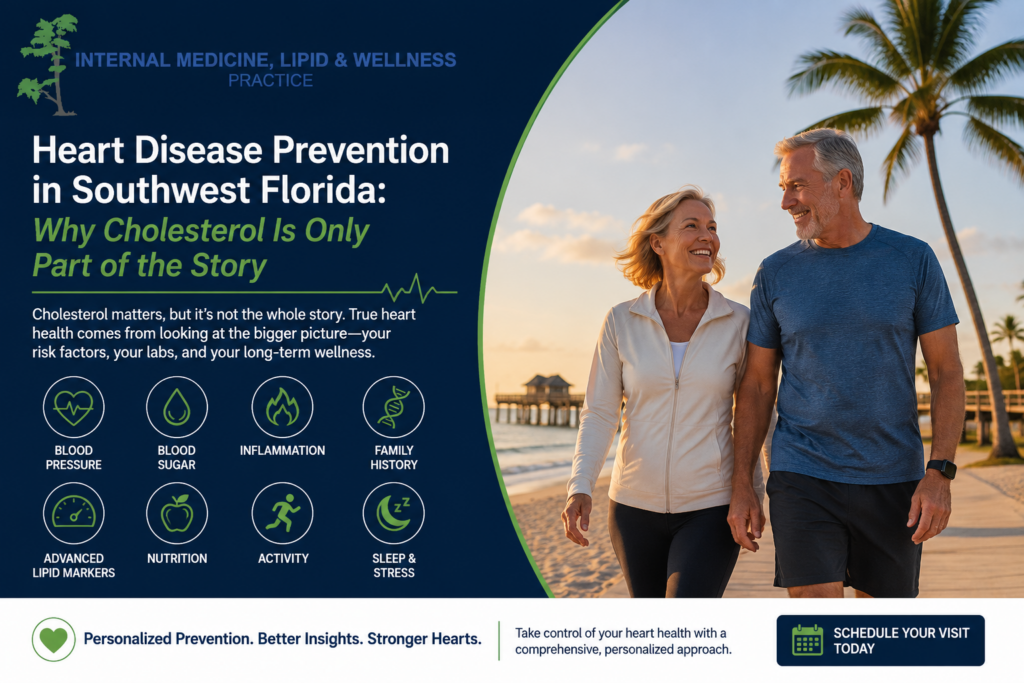
For years, cholesterol has been treated like the main character in the heart disease conversation. If your cholesterol is high, you worry. If your cholesterol is “normal,” you breathe a little easier. But when it comes to preventing heart disease, especially here in Southwest Florida where many adults are actively trying to stay healthy, active, and independent for as long as possible, cholesterol is only part of the story.
IMLWP best concierge doctor in fort myers, fl

It matters, of course. Cholesterol is important. LDL cholesterol, often called “bad cholesterol,” can contribute to plaque buildup in the arteries and increase the risk of heart attack and stroke. But the problem is that too many people stop the conversation there. They look at one number on a lab report and assume it tells the whole truth. It does not.

Heart disease is rarely caused by one isolated issue. It is usually the result of several risk factors working together over time. Blood pressure, blood sugar, inflammation, insulin resistance, family history, smoking history, weight changes, kidney function, stress, sleep, hormones, nutrition, and activity level can all play a role. Two people can have the same cholesterol number and very different levels of actual cardiovascular risk.

That is why a deeper, more personalized approach matters.

At Internal Medicine & Lipid Wellness Practice, heart disease prevention starts by looking at the whole person, not just one lab value. A cholesterol panel can provide useful information, but it is not always enough to understand what is happening inside the arteries or how the body is handling inflammation, blood sugar, and vascular stress. Prevention should not be based on guesswork. It should be based on a clearer picture of risk.

One of the biggest pieces of the puzzle is blood pressure. High blood pressure can quietly damage blood vessels for years before symptoms ever show up. Many people feel perfectly fine while their cardiovascular system is under constant strain. This is part of what makes heart disease so dangerous. The early warning signs are not always dramatic. Sometimes there are no warning signs at all.

Blood sugar is another major factor. Even before diabetes develops, insulin resistance and elevated glucose levels can increase cardiovascular risk. This is especially important for adults who have gained weight around the midsection, feel more tired after meals, have a family history of diabetes, or have been told their labs are “borderline.” Borderline is not a life sentence, but it is a signal. And signals are worth paying attention to before they become emergencies.

Inflammation also matters. Chronic inflammation can affect the blood vessels and may contribute to the development and progression of cardiovascular disease. This does not mean every ache, pain, or abnormal marker means heart disease is coming. It means inflammation should be considered as part of a broader prevention strategy, especially in people with autoimmune conditions, chronic inflammatory concerns, or a strong family history of cardiovascular disease.

Then there are advanced lipid markers that many standard checkups do not fully explore. Some patients may benefit from testing beyond basic cholesterol, including markers such as ApoB or lipoprotein(a). These can help identify risk that may not be obvious from a traditional lipid panel alone. This is especially valuable for patients who have a family history of early heart disease or who have been told their cholesterol is “not that bad” but still have other risk factors.

Family history deserves its own spotlight. If heart disease runs in your family, that information matters. It does not mean you are doomed. It means prevention needs to be smarter and more proactive. Genetics can load the gun, but lifestyle, monitoring, and medical care often influence how much risk actually develops over time. Knowing your family history gives your provider important context and gives you the chance to act earlier.

The same is true for lifestyle. Nutrition, movement, sleep, stress management, and smoking status all affect cardiovascular health. But this is not about shaming people or handing them a generic “eat better and exercise” speech. Most people already know they should move more and eat well. The real question is what does your body need, what is realistic for your life, and what changes will actually make the biggest difference for your risk profile?

That is where personalized prevention changes everything.

For someone in Southwest Florida who wants to stay active, travel, play golf, enjoy the water, keep up with family, or simply feel confident about the future, heart disease prevention is not just about avoiding a diagnosis. It is about protecting quality of life. It is about catching problems early, understanding your real risk, and creating a plan that supports long-term health instead of waiting for something scary to happen.

The goal is not to create fear. The goal is clarity.

When you understand your cholesterol, blood pressure, blood sugar, inflammation, family history, and advanced risk markers, you are no longer guessing. You are making informed decisions. You can treat what needs to be treated, improve what can be improved, and monitor what needs watching. That is real prevention.

At Internal Medicine & Lipid Wellness Practice, patients receive a more complete approach to cardiovascular wellness. Instead of focusing on cholesterol alone, care is built around a full understanding of each patient’s health, risk factors, lab results, history, and goals. Because your heart health deserves more than a quick glance at one number.

Cholesterol is important. But it is not the whole story.

If you have a family history of heart disease, high blood pressure, elevated cholesterol, diabetes risk, inflammation concerns, or you simply want a better understanding of your cardiovascular health, now is the time to take prevention seriously. The best time to address heart disease risk is before it becomes heart disease.

Schedule a visit with Internal Medicine & Lipid Wellness Practice and take the next step toward a clearer, smarter, more complete heart disease prevention plan.

Take a Proactive Approach to Heart Health

If you’re searching for advanced lipid testing in Fort Myers, IMLWP offers cutting-edge diagnostics and personalized care designed to prevent heart disease, not just react to it. Schedule a consultation today and take the next step toward a healthier heart and a longer life.

Memberships are limited to ensure we maintain our high standards of availability and care. Spots fill quickly.

Get started today. Select the concierge healthcare plan that fits your life and take control of your health.

Join Now & Schedule Your Appointment or call our office at (239) 362-3005 ext 200 to make arrangements.

Why More Fort Myers Patients Are Choosing a Membership-Based Doctor

IMLWP
IMLWP

For many patients in Fort Myers, the traditional healthcare model has started to feel rushed, reactive, and frustrating. Appointments can take weeks to schedule. Office visits may feel too short to fully discuss symptoms, lab results, medications, lifestyle changes, and long-term goals. For people managing chronic conditions, complex health concerns, or simply trying to stay proactive as they age, that kind of care often does not feel like enough.

That is one reason more Southwest Florida patients are exploring membership-based primary care.

A membership-based doctor, often referred to as concierge medicine or direct primary care, is designed to restore the relationship between patient and physician. Instead of relying on high-volume, insurance-driven visits, this model allows practices to limit the number of patients they accept. The result is more time, better access, and a more personalized approach to ongoing health management.

At Internal Medicine, Lipid & Wellness Practice in Fort Myers, this approach includes longer appointments, direct physician access, advanced preventive care, and a “medical home” model built around continuity. Standard visits are typically 30 to 60 minutes, while initial appointments may allow up to 90 minutes for a deeper review of the patient’s history, concerns, goals, and overall health picture. The practice also emphasizes advanced metabolic profiling, lipidology, chronic disease management, and care coordination for patients who need support beyond a basic office visit.

For many patients, access is one of the biggest advantages. A membership model can offer same-day acute visits, after-hours advice, direct communication with the physician, and more responsive follow-up. That can be especially valuable for busy professionals, retirees, seasonal residents, and anyone who wants a doctor who knows their history instead of starting from scratch every time. IMLWP’s membership information also notes that concierge memberships include unlimited office visits, annual physicals with comprehensive labs, specialist care coordination, on-site pulmonary and cardiac stress testing, body fat analysis, metabolic rate testing, and access to an in-house dispensary for generic medications at wholesale cost.

Another reason patients are making the switch is prevention. Many people do not want to wait until a health issue becomes serious before getting answers. Membership-based primary care gives physicians more room to look at patterns, monitor risk factors, evaluate advanced labs, and guide patients through lifestyle, medication, and wellness decisions before small concerns become larger problems.

This model can be particularly helpful for patients managing high cholesterol, hypertension, diabetes, metabolic syndrome, thyroid concerns, hormone and endocrine issues, cardiac risk, digestive concerns, and other ongoing conditions. IMLWP’s Fort Myers practice highlights comprehensive care for a wide range of adult health concerns, along with advanced lipid testing for cardiovascular risk assessment and prevention.

For patients tired of feeling rushed, overlooked, or shuffled through the system, membership-based medicine offers something refreshingly old-school: a real relationship with a doctor who has time to listen.

In Fort Myers and throughout Southwest Florida, patients are not just looking for another appointment. They are looking for access, trust, prevention, and a physician who can help them think long-term. For many, a membership-based doctor is not just a different way to receive care. It is a smarter way to protect their health.

Ready to learn more or schedule in Fort Myers, Florida? You can reach the office of Internal Medicine Lipid and Wellness Practice by dialing 239-362-3005. Or, visit them on the web at www.IMLWP.com today!

5 Ways a Concierge Doctor Can Help Boost Your Health in Ft. Myers

imwlp concierge doctors ft myers florida

Finding the right doctor can make a major difference in how a person feels, ages, and manages long-term health. For many patients, traditional healthcare can feel rushed, reactive, and impersonal. Appointments may be short, lab work may only cover the basics, and deeper health concerns can get pushed aside until symptoms become more serious.

Concierge medicine offers a different approach.

At Internal Medicine, Lipid & Wellness Practice in Ft. Myers, the focus is on personalized, proactive care that helps patients better understand their health and take meaningful steps toward improvement. Instead of waiting for illness to become the reason for care, concierge medicine allows patients to build an ongoing relationship with a physician who has the time to look deeper.

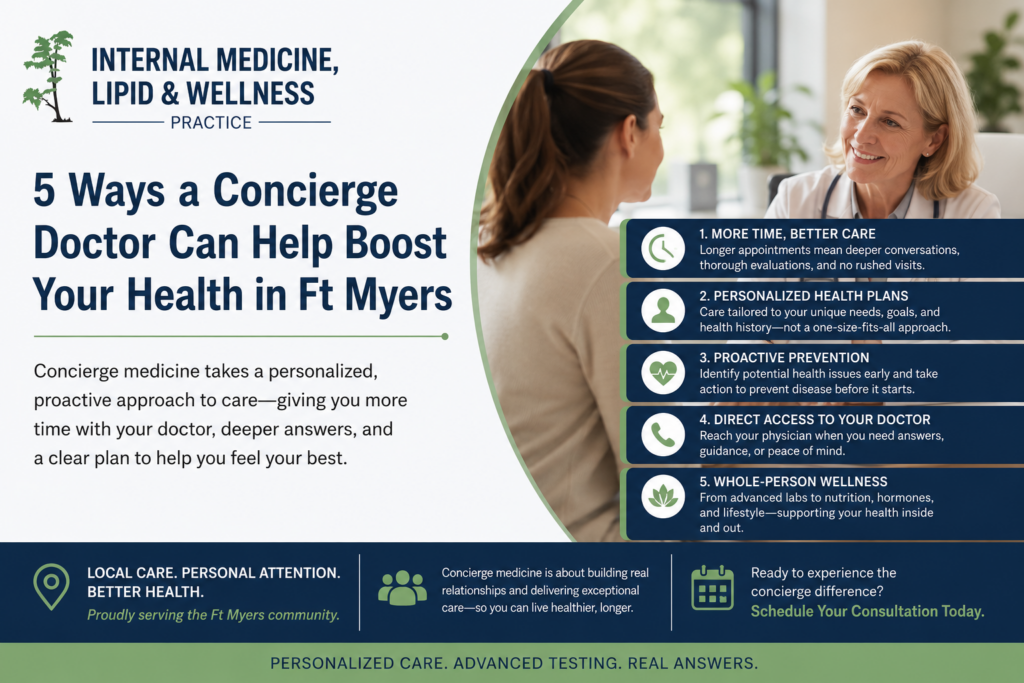
Here are five ways a concierge doctor can help boost health and support long-term wellness.

1. More Time With the Doctor

One of the biggest advantages of concierge medicine is time. Longer appointments allow for more detailed conversations, more thorough evaluations, and a better understanding of the patient’s full health picture.

In a rushed visit, it can be difficult to discuss fatigue, weight changes, sleep concerns, stress, medications, family history, hormones, heart health, and lifestyle in a meaningful way. With concierge care, patients are not treated like a checklist. They are treated like whole people.

That extra time can lead to better questions, better answers, and a clearer path forward.

2. Personalized Health Plans

No two patients are exactly alike. Age, genetics, metabolism, lifestyle, medical history, stress levels, and goals all matter. A concierge doctor can create a health plan based on the individual, not a one-size-fits-all template.

This may include customized lab testing, nutrition guidance, medication management, cardiovascular risk assessment, weight management support, hormone evaluation, and practical lifestyle recommendations. The goal is not simply to “manage numbers,” but to help patients feel better and function better.

Personalized care can be especially helpful for patients who have been told their labs are normal but still do not feel like themselves.

3. A More Proactive Approach to Prevention

Traditional medicine often focuses on treating problems after they appear. Concierge medicine is designed to be more proactive.

For example, advanced lipid testing, metabolic markers, inflammation levels, blood sugar trends, and family history can reveal risk factors that may not show up on basic testing. This deeper view allows the physician to identify potential issues earlier and help patients take action before bigger problems develop.

Prevention is not just an annual physical. It is an ongoing strategy.

4. Direct Access and Better Communication

When patients have questions, waiting days or weeks for guidance can be frustrating. Concierge medicine often allows for better communication and improved access to the physician.

This can be especially valuable when reviewing lab results, adjusting medications, discussing new symptoms, or making health decisions. Patients benefit from having a doctor who knows their history and can provide more informed guidance.

Better access can also create peace of mind. Health should not feel like a guessing game with a voicemail system as the referee.

5. Whole-Person Wellness Support

Good health is more than the absence of disease. Energy, strength, sleep, mood, metabolism, heart health, hormones, and quality of life all play a role.

Internal Medicine, Lipid & Wellness Practice takes a comprehensive approach to care by looking at how different systems in the body work together. This type of whole-person view can help uncover patterns that may be missed when each symptom is treated separately.

For patients in Ft. Myers who want more personalized attention, deeper testing, and a physician relationship built around prevention, concierge medicine can be a powerful option.

A concierge doctor does more than respond to illness. The right physician helps patients understand their health, protect their future, and create a smarter plan for living well.

Ready for a great concierge doctor right in Ft. Myers, Florida? Visit: www.IMLWP.com today!