If you eat well, stay active, and still hear your doctor say, “Your cholesterol is high,” it can feel frustrating and confusing. After all, you’re doing everything “right.” So what’s going on?
At Internal Medicine Wellness & Lipid Practice (IMWLP), we see this scenario all the time. The truth is, cholesterol is far more complex than diet alone. If your numbers aren’t improving despite your healthy lifestyle, there may be deeper factors at play.
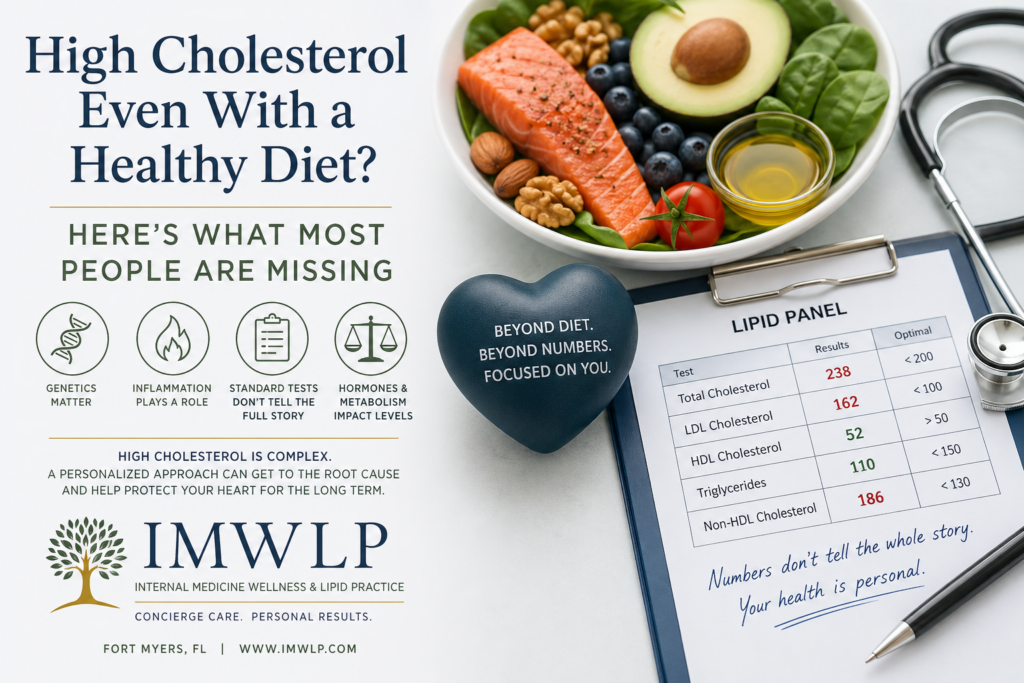
Let’s break down what most people are missing.
It’s Not Just About What You Eat
Diet absolutely matters (but it’s only one piece of the puzzle).
Your body actually produces the majority of its cholesterol in the liver. That means even if you cut out saturated fats and processed foods, your cholesterol levels can still remain elevated due to internal processes you can’t control through diet alone.
Genetics Play a Major Role
One of the most overlooked causes of high cholesterol is genetics.
Conditions like familial hypercholesterolemia (FH) can cause your body to maintain high LDL (“bad cholesterol”) levels regardless of how clean your diet is. Many people don’t even realize they have a genetic predisposition until routine labs reveal persistently high numbers.
If high cholesterol runs in your family, it’s important to look beyond lifestyle changes and consider advanced testing and targeted treatment.
Inflammation Is the Hidden Driver
Cholesterol isn’t just about numbers, it’s about how your body is functioning as a whole.
Chronic inflammation can contribute to plaque buildup in arteries, even if your cholesterol levels are only mildly elevated. Stress, poor sleep, underlying conditions, and even gut health can all fuel inflammation and increase cardiovascular risk.
This is why two people with the same cholesterol numbers can have very different health outcomes.
Standard Testing Doesn’t Tell the Full Story
Most routine lipid panels measure total cholesterol, LDL, HDL, and triglycerides. While helpful, these numbers don’t always give the full picture.
Advanced lipid testing can reveal:
- Particle size and number (more predictive of risk)
- Lipoprotein(a), a genetic risk factor
- Apolipoprotein B (ApoB), a key marker of cardiovascular risk
Without this deeper insight, underlying risks can go unnoticed.
Hormones and Metabolism Matter
Hormonal imbalances (especially involving thyroid function, insulin resistance, or menopause) can significantly impact cholesterol levels.
Even individuals who appear “healthy” on the surface may have subtle metabolic issues contributing to elevated cholesterol.
A Personalized Approach Makes the Difference
If you’ve been told to “just eat better” but your numbers aren’t improving, it may be time for a more personalized, comprehensive approach.
At IMWLP, we focus on:
- Advanced lipid and metabolic testing
- Identifying root causes, not just treating numbers
- Customized treatment plans, including lifestyle, nutrition, and when appropriate, medication
- Ongoing, concierge-level support to optimize your long-term health
The Bottom Line
High cholesterol isn’t always a reflection of poor lifestyle choices. In many cases, it’s a complex interplay of genetics, metabolism, inflammation, and more.
If you’re doing everything right and still not seeing results, you’re not alone—and you’re not out of options.
A deeper, more individualized approach can uncover what’s really driving your cholesterol—and help you take control of your health with confidence.
Ready to get answers?
IMWLP in Fort Myers offers concierge-level care designed to go beyond the basics, so you can finally understand your numbers and what to do about them. Get started today. Select the concierge healthcare plan that fits your life and take control of your health.
Join Now & Schedule Your Appointment or call their office at (239) 362-3005 ext 200 to make arrangements.