For years, cholesterol has been treated like the main character in the heart disease conversation. If your cholesterol is high, you worry. If your cholesterol is “normal,” you breathe a little easier. But when it comes to preventing heart disease, especially here in Southwest Florida where many adults are actively trying to stay healthy, active, and independent for as long as possible, cholesterol is only part of the story.
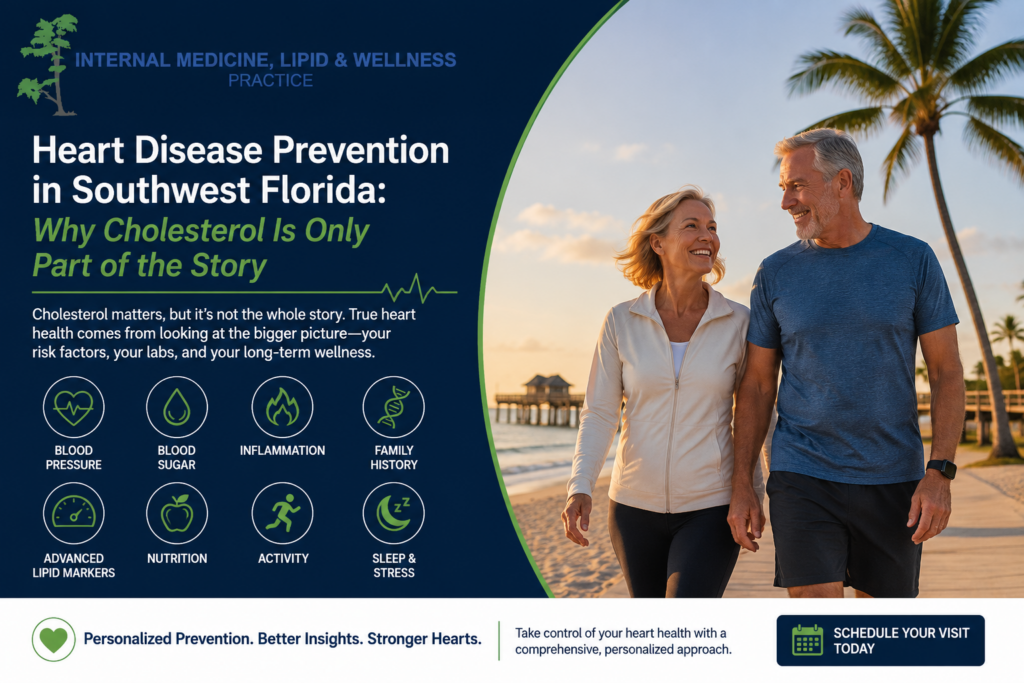
It matters, of course. Cholesterol is important. LDL cholesterol, often called “bad cholesterol,” can contribute to plaque buildup in the arteries and increase the risk of heart attack and stroke. But the problem is that too many people stop the conversation there. They look at one number on a lab report and assume it tells the whole truth. It does not.
Heart disease is rarely caused by one isolated issue. It is usually the result of several risk factors working together over time. Blood pressure, blood sugar, inflammation, insulin resistance, family history, smoking history, weight changes, kidney function, stress, sleep, hormones, nutrition, and activity level can all play a role. Two people can have the same cholesterol number and very different levels of actual cardiovascular risk.
That is why a deeper, more personalized approach matters.
At Internal Medicine & Lipid Wellness Practice, heart disease prevention starts by looking at the whole person, not just one lab value. A cholesterol panel can provide useful information, but it is not always enough to understand what is happening inside the arteries or how the body is handling inflammation, blood sugar, and vascular stress. Prevention should not be based on guesswork. It should be based on a clearer picture of risk.
One of the biggest pieces of the puzzle is blood pressure. High blood pressure can quietly damage blood vessels for years before symptoms ever show up. Many people feel perfectly fine while their cardiovascular system is under constant strain. This is part of what makes heart disease so dangerous. The early warning signs are not always dramatic. Sometimes there are no warning signs at all.
Blood sugar is another major factor. Even before diabetes develops, insulin resistance and elevated glucose levels can increase cardiovascular risk. This is especially important for adults who have gained weight around the midsection, feel more tired after meals, have a family history of diabetes, or have been told their labs are “borderline.” Borderline is not a life sentence, but it is a signal. And signals are worth paying attention to before they become emergencies.
Inflammation also matters. Chronic inflammation can affect the blood vessels and may contribute to the development and progression of cardiovascular disease. This does not mean every ache, pain, or abnormal marker means heart disease is coming. It means inflammation should be considered as part of a broader prevention strategy, especially in people with autoimmune conditions, chronic inflammatory concerns, or a strong family history of cardiovascular disease.
Then there are advanced lipid markers that many standard checkups do not fully explore. Some patients may benefit from testing beyond basic cholesterol, including markers such as ApoB or lipoprotein(a). These can help identify risk that may not be obvious from a traditional lipid panel alone. This is especially valuable for patients who have a family history of early heart disease or who have been told their cholesterol is “not that bad” but still have other risk factors.
Family history deserves its own spotlight. If heart disease runs in your family, that information matters. It does not mean you are doomed. It means prevention needs to be smarter and more proactive. Genetics can load the gun, but lifestyle, monitoring, and medical care often influence how much risk actually develops over time. Knowing your family history gives your provider important context and gives you the chance to act earlier.
The same is true for lifestyle. Nutrition, movement, sleep, stress management, and smoking status all affect cardiovascular health. But this is not about shaming people or handing them a generic “eat better and exercise” speech. Most people already know they should move more and eat well. The real question is what does your body need, what is realistic for your life, and what changes will actually make the biggest difference for your risk profile?
That is where personalized prevention changes everything.
For someone in Southwest Florida who wants to stay active, travel, play golf, enjoy the water, keep up with family, or simply feel confident about the future, heart disease prevention is not just about avoiding a diagnosis. It is about protecting quality of life. It is about catching problems early, understanding your real risk, and creating a plan that supports long-term health instead of waiting for something scary to happen.
The goal is not to create fear. The goal is clarity.
When you understand your cholesterol, blood pressure, blood sugar, inflammation, family history, and advanced risk markers, you are no longer guessing. You are making informed decisions. You can treat what needs to be treated, improve what can be improved, and monitor what needs watching. That is real prevention.
At Internal Medicine & Lipid Wellness Practice, patients receive a more complete approach to cardiovascular wellness. Instead of focusing on cholesterol alone, care is built around a full understanding of each patient’s health, risk factors, lab results, history, and goals. Because your heart health deserves more than a quick glance at one number.
Cholesterol is important. But it is not the whole story.
If you have a family history of heart disease, high blood pressure, elevated cholesterol, diabetes risk, inflammation concerns, or you simply want a better understanding of your cardiovascular health, now is the time to take prevention seriously. The best time to address heart disease risk is before it becomes heart disease.
Schedule a visit with Internal Medicine & Lipid Wellness Practice and take the next step toward a clearer, smarter, more complete heart disease prevention plan.
Take a Proactive Approach to Heart Health
If you’re searching for advanced lipid testing in Fort Myers, IMLWP offers cutting-edge diagnostics and personalized care designed to prevent heart disease, not just react to it. Schedule a consultation today and take the next step toward a healthier heart and a longer life.
Memberships are limited to ensure we maintain our high standards of availability and care. Spots fill quickly.
Get started today. Select the concierge healthcare plan that fits your life and take control of your health.
Join Now & Schedule Your Appointment or call our office at (239) 362-3005 ext 200 to make arrangements.