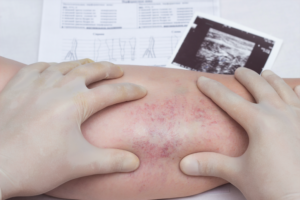

Diagnosing Varicose Veins

varicose-veins-tampa-fl

varicose-veins-tampa-flIf you suspect you may have vein issues seeking medical attention as soon as possible is the best way to get your legs back to health.



Surface level veins are pretty easily diagnosed visually but when vein issues are deeper there are certain medical tests and procedures that can be processed when it comes to finding the damage and determining the extent. These same tests can also be used to rule out possible conditions.

If your skin in the area affected is having issues as well it is not unusual for your Dermatologist to work in conjunction with your Vein Specialist.

The Exam

Both standing and seated a visual examination is done on the patients’ legs. Questions will be asked as to how you feel standing, walking, sitting, running, and even while sleeping.

Ultrasound (Duplex)

A duplex ultrasound is a combination of the traditional with the newer technology of the Doppler ultrasound. Traditional ultrasound operates on sound waves in order to create an image of the structures. In this test, you can see the blood vessels and view anything that may be blocking the blood flow.

Doppler ultrasound uses sound waves to create pictures of the movement of the blood. The two together create a picture that can assist your doctor in diagnosing your condition more easily. Your physician may recommend a duplex ultrasound in order to look for blood clots as well.

The Ultrasound Experience

A handheld ultrasound device is placed on your body during this test in the area of suspected issue. It will be moved back and forth over the area. The unit works by sending and receiving sound waves. Those waves are then sent to a computer which will then convert into a visual image of the arteries and veins.

If a diagnosis of vein disease and accompanying varicose veins is made, your doctor will then recommend the very best treatment path possible to get your legs back to health.

Angiogram

If a simple physical exam isn’t enough, an angiogram may be used. During an angiogram, a nonreactive nontoxic dye is injected into your leg veins suspected of sustaining damage. Dying the veins allows the outlines to be viewable on an X-ray image. This is not very commonly used in most exams but can be incredibly valuable if a detailed look at blood flow routes is needed. This test can both confirm a diagnosis of varicose veins or may point to a different condition.

If you are in the Safety Harbor or Tampa, Florida area and in need of a Vein Specialist we hope you consider The West Florida Vein Center. www.westfloridaveincenter.com (727) 712-3233.

The Opioid Epidemic and How to Heal Naturally with Chiropractic Instead

opioid

opioidLiving in pain can make life unbearable.

It is no shock that so many patients become addicted to prescribed opioid pain killers. Taking pain killers initiates a vicious cycle where the pain is gone and you feel ok too as soon as it wears off you are right back to square one again and relying on pills to be able to navigate life.

Florida has a huge prescription drugs problem. By the CDC’s latest numbers as many as 1 in 4 patients who are prescribed opioids for long term care will have to deal with addiction. Thousands are being treated yearly in Florida’s emergency rooms for abusing their prescriptions.

Just in the past 20 years, deaths involving prescription opioid medications have quadrupled.

It isn’t just an addiction that needs to be focused on. There is the fact that these drugs do nothing to heal you. Numbing a pain may convince the patient that they are healing or that the problem is less severe in nature than it really is.

Chiropractic and other non-drug approaches to pain management can be the first line against pain and addiction caused by the saturation of the body by prescription opioid pain medications. Growing research validates the effectiveness of chiropractic, leading many respected health care organizations to recommend chiropractic for pain relief.

The American College of Physicians updated the guidelines for the treatment of acute and chronic low back pain to recommend chiropractic first before resorting to drug therapies.

The American Chiropractic Association (ACA) encourages patients to utilize non-drug related therapies first before resorting to the use of prescription drugs to help alleviate pain.

Even the CDC Center for Disease Control has announced guidelines for prescribing opioids that also promote non-drug alternatives for the treatment of chronic pain.

You do not have to live in pain or constantly rely on prescription medication to try to normalize again. We invite you to come to see us at the office of Dr. Jason Kaster, D.C. right here in Fort Myers, Florida. Let us get you back on track to health and eliminate pain, naturally – by allowing your body a chance to really heal.

Call the office of Dr. Jason Kaster, D.C. in Fort Myers, Fl. 239-332-2555 or visit him online at www.drkasters.com to learn more.

Why You Should See Your Chiropractor Following a Car Accident

car-accident-fort-myers

car-accident-fort-myersWhat to do following an accident:

Call the police and file a report

Get the other party’s information and insurance card

– Remaining calm can help reduce the inflammatory reaction

Go to the ER to get checked out for any broken bones or internal injuries

– Ice any areas you feel pain in for 10 – 15 minutes at a time repeating every couple of hours.

– Take Turmeric, Bromelain, or Papain to help with inflammation and pain. Though it OTC remedies like Tylenol or Alleve do work well, they can also slow healing.

– Use Arnica Montana – A homeopathic made from arnica flowers for bruising and muscle soreness. It can be taken orally or applied topically.

– Rest

– Expect delayed onset muscle soreness. Much like going to the gym and working out really hard, over the next few days you will very likely feel sore. It will pass, just be easy on yourself in the meantime.

See your chiropractor ASAP – Following the ER Visit getting in to see your chiropractor is vital. You have 14 days in the state of Florida to seek medical help.

Seeing a chiropractor as soon as possible enables your body to heal as quickly and easily as possible while minimizing damage. A thorough exam will be performed as well as X-rays. If they feel you need an immediate adjustment they will do that as well as set the course of treatment going forward.

Even in the event of a minor accident, the curvatures in the spine can be straightened. This is especially true of the neck and cervical spine. The soft tissues may heal but without realignment, the spinal curvature remains straightened. This may cause osteoarthritis and degenerative joint disease as you age.

When you are involved in an accident the two parties that show up on the scene when you call 911 are the police and the ambulance. It is important to get checked if you feel any pain or discomfort, first for broken bones, potential internal injuries, cuts, and bruises, or contusions. The EMT’s and the emergency room are great for this. What many overlook are that there are even more likely, due to impact, possible misalignments now in your musculoskeletal system. This is sometimes referred to as soft tissue damage and misalignment issues.

In the 24 hour period following an accident, your body can be in a state of shock. Your system is trying to protect you by producing dopamine and other chemicals in the brain. This is so that you can still function post-trauma to be able to get yourself out o the situation that has or is injuring you. Because of this, you may not feel the damages inflicted. Pain and soreness often don’t set it till the next day.

Car accident pain can occur anywhere in the body. The most common injuries are neck injuries because of the way we are strapped to our vehicles. Though we are held in tight by the body, our heads have to be able to stay mobile. When a vehicle is hit, the neck is whipped one way then back the other way. This is known as Hyperflexion-hyperextension. These injuries can majorly affect the soft tissues in the neck as well as the joint capsules and intervertebral discs.

The result is often whiplash

Whiplash symptoms:

  • Neck pain and soreness
  • Shoulder pain and soreness
  • Arm pain
  • Numbness
  • Dizziness
  • Inflammation
  • Jaw issues
  • Anxiety
  • Nausea
  • Back pain
  • Depression
  • Lightheadedness
  • Foggy thinking

If you have been in an accident or know someone who has – though the sooner the better on treatment, there is no time limit where you can heal. Even older injuries can be helped through chiropractic care.

Give us a call 

239-332-2555 or visitwww.drkasters.com

Varicose Vein and Venous Insufficiency – The Symptoms

varicose-veins-tampa

varicose-veins-tampaThe first thing most people think as they notice their very first spider vein or varicose vein is “Oh no”. The once beautiful skin on their legs is now flawed (or perceived to be so).

The next is likely scanning their immediate family history. Did my mom or dad have varicose veins? My grandparents? Aunts? Uncles?
While genetics does raise your risk factor so does lifestyle, there are things you can do to help stop them in their tracks. It’s positive that you were paying attention and noticed.

Varicose veins are considered to be unattractive and most who notice symptoms of venous insufficiency will do their best to adjust their wardrobe accordingly to hide them.  To most people, the lack of pain translates to it not being a legitimate medical issue. That is simply not the truth.

Symptoms vary from patient to patient, varicose veins are a sign that your circulatory system is in distress. Step #1 is drink more water. You are chronically dehydrated. Step # 2 is to seek professional help from a Vein Specialist. Catching them as soon as they begin to appear will save you probable pain later in life as well as help to stop them from spreading and becoming more of an issue.

Signs you are developing varicose veins:

  • You can see veins that were once hidden
  • Veins are dark purplish blue
  • Veins look twisted, swollen, and may bulge
  • Your legs may ache
  • Spider veins (telangiectasia) may also begin to appear
  • Your ankles may become swollen
  • Discoloration may present – skin becomes shiny – brownish or blue in color
  • Your legs may feel heavy, especially at night or right after a workout
  • If you happen to cut the affected area its harder than usual to stop the bleeding
  • You may experience lipodermatosclerosis – The fat under the skin above the ankle becomes hard
  • You may develop eczema on the affected area. It will become red, itchy, and dry
  • Leg cramps upon standing may be experienced
  • Restless Leg Syndrome (twitching of the legs while trying to sleep) may begin
  • Irregular white patches that look like scars may appear near the ankle (Atrophie Blanche)

Complications become a risk with inhibited blood flow. These can include:

  • Blood clots
  • Bleeding
  • Chronic venous insufficiency (it is often mistakenly believed that this is the same as varicose veins. In cases of chronic venous insufficiency, the skin does not exchange nutrients, oxygen, or waste products with blood properly due to weak blood flow. Chronic venous insufficiency and varicose veins are two different entities that are closely related.
  • Those who present with chronic insufficiency are likely to develop varicose eczema as well as venous ulcerations.

It is important to get a medical evaluation for signs of chronic venous insufficiency and symptoms of varicose veins.

If you are in the Tampa Bay Florida area and would like to get a professional opinion as well as a proposed treatment plan to get you in the best possible vascular health call Dr. Zuzga of The West Florida Vein Center today at 

(727) 712-3233. www.westfloridaveincenter.com.

Spending time in a sauna provides great benefits for the heart and preventing disease

Diet and exercise. When it comes to heart health, these two lifestyle habits are known to truly help – or hinder – the health of your heart. We’ve all heard about the benefits of eating healthy and being active, but did you know that sitting in a sauna has health benefits for your heart? It does!

For centuries, saunas have been praised for their health benefits. While in a sauna, a person’s body temperature increases, which means the heart rate increases, as well. The cardiac output is higher. If the heart rate rises, but the vessels of the body relax, resistance is lowered. Blood flow to the skin will increase and decrease to other organs.

In one study, saunas created a significant decrease in blood pressure in patients with high blood pressure. Saunas had the same results as blood pressure medications. Other studies have shown that a sauna is beneficial for congestive heart failure patients. Patients felt improved after using a sauna.

In a study done at the University of Eastern Finland, frequent sauna visits were associated with lower death rates from cardiovascular disease and stroke. Time in the sauna may keep the heart healthy and even extend a person’s life. Other studies have shown that regular time in the sauna may benefit people with risk factors for heart disease such has high cholesterol and diabetes.

Saunas are not recommended for patients with low blood pressure, unstable angina, or those who just recently a heart attack.

Schedule an Appointment with a Tampa Heart Valve Surgeon

If you have a history of heart disease in your family or currently suffer from heart disease, talk to a heart valve surgeon; you may be a candidate for heart valve surgery. Dr. Peter Mikhail is a heart valve surgeon who specializes in mitral valve surgery and TAVR. To book a consult, click our heart valve surgery page or call 727-312-4844. He is based in New Port Richey, Florida, and treats patients in the Tampa and Clearwater area.

Understanding the basics of aortic stenosis

Aortic stenosis is a form of aortic valve disease. With this condition, the aortic valve’s flaps (cusps) have thickened or become stiff and could possibly fuse together, which narrows the valve. Because of this, the valve’s opening is narrowed and blocks or reduces blood flow from the heart into the aorta and to the rest of the body. Aortic stenosis is also referred to as a tight aortic valve.

When the aortic valve is tight, there is greater stress on the heart and less blood going elsewhere in the body. When a person has aortic stenosis, the aortic valve does not open properly, so it is harder for blood to leave the heart.

If a person has a serious case of aortic stenosis, the stress placed on the heart can potentially lead to heart failure and death. If the heart is working harder to pump the blood out because of the stenosis, the heart muscle becomes thicker, which can lead to congestion and congestive heart failure.

Most people who develop aortic stenosis are older in age. Over time, the aortic valve just becomes damaged from wear and tear. The degeneration of the aortic valve leads to a build up of calcium, which makes the valve become less mobile, which is what restricts the valve from opening easily.

Mild aortic stenosis usually isn’t a problem, but severe aortic stenosis can have bad side effects that can lead to worse complications. When a person has severe aortic stenosis and is experiencing symptoms or signs of heart weakness, he or she should seek treatment. Some signs and symptoms of aortic stenosis include chest pain, shortness of breath, dizziness, passing out, and fatigue. Patients with severe aortic stenosis need treatment or they will not survive past a few more years.

A heart valve specialist can determine the severity of your aortic stenosis. A doctor can diagnose your aortic stenosis through listening for a murmur through a stethoscope, listening for a certain type of pulse, from an echocardiogram, and through a stress test.

Aortic stenosis must be treated through surgery. Medicine cannot treat this condition. A patient will need either an aortic valve repair or an aortic valve replacement. Not everyone is an eligible candidate for this surgery. To get this surgery, the benefits must be greater than the risks for the patient.

Dr. Peter Mikhail is a heart valve surgeon who performs TAVR and mini-AVR on his patients with aortic valve stenosis and aortic valve disease. To learn more about this surgery, click his aortic valve surgery page.

Looking for an Tampa Aortic Valve Surgeon?

If you have aortic valve disease, it’s time to talk to a heart valve surgeon to see if you are a candidate for aortic valve surgery. Dr. Peter Mikhail is a heart valve surgeon who specializes in mini-AVR and TAVR. To book a consult, click our heart valve surgery page or call 727-312-4844. He is based in New Port Richey, Florida, and treats patients in the Tampa and Clearwater area.

Why do we sweat so much? What are the causes of sweat?

We all sweat, but we all sweat differently. Some people sweat more than others – and there’s nothing wrong with that! Unless, of course, you have a condition like hyperhidrosis, for which you should seek treatment to better manage your excessive sweating.

We can sweat in all areas of our bodies because we have about two to five million sweat glands. On average, a person will sweat 1.5 gallons per day. If you’re extremely active, you can sweat up to four gallons per day.

There are several different factors that affect how much we sweat.

  • Exercise – Exercise produces sweat because your body temperature rises during your workout, and sweating is your body’s response to cool the body down. When exercising, people sweat differently depending on oxygen uptake, cardiovascular fitness and aerobic endurance.
  • Genetics – The way you sweat can just be genetics. Your parents or siblings may have similar sweating patterns. Hyperhidrosis is a genetic condition.
  • Weight – The heavier you are, the more you will sweat. People with excess weight feel hotter and it can take longer to cool the body down than for a slimmer person.
  • Sweat gland placement – If you’re prone to sweating in a certain area, you may have a higher number of sweat glands there.
  • Gender – Men usually have more active sweat glands than women.

Sweating is a part of life and there are plenty of daily steps you can take to manage it –  antiperspirants (OTC and prescription), medications, surgery, Botox injections, and more.

Schedule an Appointment with a Hyperhidrosis Physician and Surgeon

If you’re concerned about the amount you sweat, talk to a doctor. A doctor can evaluate your symptoms and examine your body to determine if you have hyperhidrosis. You and your doctor can then come up with a treatment plan that will help you manage your sweat, so you can go about your daily activities without worrying about sweaty palms or armpit stains on your clothing.

Looking for a hyperhidrosis doctor? Dr. Peter Mikhail is a Tampa hyperhidrosis physician and surgeon with offices in Tampa and New Port Richey, Florida. To book a consult, click our Tampa hyperhidrosis treatment contact page or call 727-312-4844.

Does armpit hair effect how much I sweat?

If you have armpit hair and you sweat a lot, you’ve probably wondered if your hair affects the amount that you sweat. Does the hair make you sweat more? Should I shave my armpits? No, don’t shave your armpits, unless you want! Shaving your armpits will not make you sweat less; however, shaving (or trimming) can help make an antiperspirant more effective. By having little to no hair, you can also help reduce the sweat stains on your clothing.

Your armpits expel sweat for several reasons: stress, anxiety, nervousness, and to cool you down when your body temperature gets high. Your body will produce sweat whether you have armpit hair or not. The amount you sweat depends on the eccrine and apocrine sweat glands in your armpits. These two types of glands produce sweat depending on your exertion and stress levels, so the amount of hair has no effect on the production of sweat.

Armpit hair can make the sweat stains on your clothes worse. Why? Your armpit hair holds moisture more than your skin. Also, the hair keeps the antiperspirant from being absorbed into the skin, so you likely will sweat more. With armpit hair, your underarms probably will get wetter and armpit stains will appear more quickly than if you trimmed or shaved the hair off.

Whether you shave or not, remember to fully dry your armpit area before applying antiperspirant. A wet armpit can block the aluminum in the antiperspirant from being absorbed into the sweat glands.

If you like your armpit hair, you don’t have to shave your armpit hair to prevent sweaty armpits. Instead, try trimming the hair. By trimming the hair, you will help the antiperspirant absorb better into the skin.

Having a hard time managing your sweat? You will sweat whether you’re shaved or not. If you have hyperhidrosis, this sweat is excessive and can disrupt your daily life. If nothing you do helps your sweat, it may be time to contact a doctor.

Dr. Peter Mikhail is a Tampa hyperhidrosis physician and surgeon with offices in Tampa and New Port Richey, Florida. Dr. Mikhail will look at your symptoms to determine if you have hyperhidrosis and will discuss the best treatment plan for you. To book a consult, click our Tampa hyperhidrosis treatment contact page or call 727-312-4844.

Side effects that may occur from lung cancer surgery

If you are a lung cancer patient, there’s a chance lung cancer surgery is possible for you, and it could save your life. If you are a candidate for lung cancer surgery, it is in your best interest to get the procedure. However, every surgery has its risks, but living with lung cancer also has its risks because it is a deadly disease. Millions of people die each year from lung cancer.

Following are a few side effects a patient may or may not experience after lung cancer surgery:

  • Coughing may be difficult.
  • The chest may be sore.
  • You may develop a chest infection.
  • You may feel shortness of breath.
  • You may feel pain/burning/numbness/tingling in the upper back/shoulder/under breast/and abdomen.
  • Your skin may be hypersensitive.
  • You may experience constipation from pain medication.
  • You may be extra tired.

Many of these side effects are entirely normal, while some are more concerning. Before your surgery, your doctor will discuss with you the possible side effects, so you will have a general idea of what to expect. However, if you are experiencing any pain, it is a good idea to mention it to your doctor to make sure what you’re experiencing is “normal”. The doctor will see you if he/she is concerned about your side effects.

Your doctor will help you through the post-op healing process.

Book an Appointment with a Tampa Robotic Lung Surgeon

Surgery can be scary, but lung cancer is scarier. Robotic lung surgery is minimally-invasive surgery, so your recovery time will be less. If you are a good candidate, robotic lung cancer surgery may be your best option to being cancer free.

Dr. Peter Mikhail is a robotic lung specialist and surgeon who performs robotic lung surgery to treat lung cancer. To learn more about robotic lung surgery, click Dr. Mikhail’s Tampa Robotic Lung Surgery page or call his office at 727-312-4844 to book an appointment or for more information. Dr. Mikhail has offices in Tampa and New Port Richey, Florida.

The various types of lung cancer

There are three different types of lung cancer: Non-small cell lung cancer, small cell lung cancer and large cell lung cancer. The type of lung cancer you have depends on the area of lung affected and its appearance.

In this article, we share with you a little information about the different kinds of lung cancer.

Non-small Cell Lung Carcinoma

Most lung cancers (80 percent) are non-small cell cancers. There are three subtypes of non-small cell lung cancer. Adenocarcinoma usually occurs in the outer glands of the lungs. It is the most common non-small cell cancer. It is often seen in women and non-smokers. Squamous cancer occurs in the bronchial tube linings. The lungs are often inflamed with this type of cancer. This type of cancer is found often in men. Bronchioalveolar cancer develops close to the air sacs but it is rare.

Small Cell Carcinoma
This type of cancer is the most aggressive form of lung cancer. It has small cancer cells which grow quickly and can affect several body parts. Only 20 percent of lung cancer patients have this type of cancer. Almost all small cell cancers are connected to smoking.

Large Cell Carcinoma
With large cell carcinoma, the cancer cells develop in the outer edges of the lungs. Cancer grows fast with this type of cancer. It can be removed with chemotherapy or by radiation therapy.

Schedule an Appointment for Robotic Lung Surgery in Tampa

If you have lung cancer, find out if it can be removed with minimally-invasive robotic surgery. Different stages and types of cancer have different treatment options.

Looking for a lung surgeon? Dr. Peter Mikhail is a robotic lung specialist and surgeon who performs robotic lung surgery to treat lung cancer patients. He will determine if you are a good candidate for this type of lung cancer surgery. To learn more about robotic lung surgery, click Dr. Mikhail’s Tampa Robotic Lung Surgery page or call his office at 727-312-4844 to book an appointment or for more information. Dr. Mikhail has offices in Tampa and New Port Richey, Florida.